
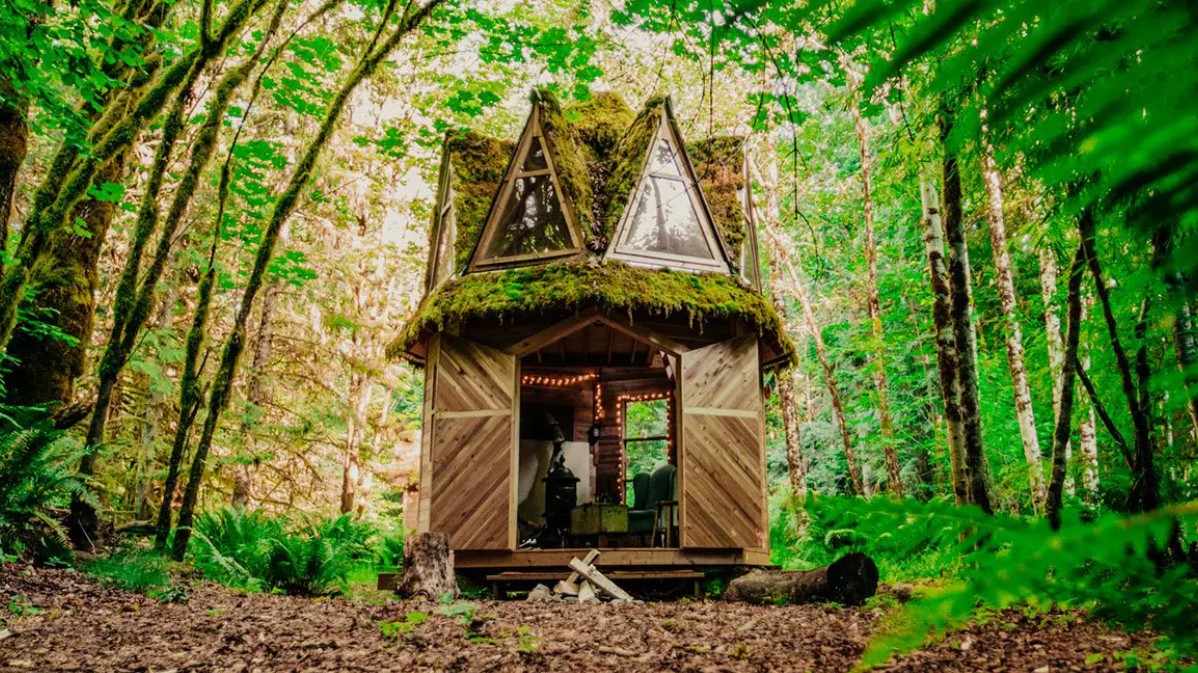
This Moss-Covered Tiny Cabin Looks Like It Belongs in a Fairy Tale
Andrea | 07/26/2026
Some tiny homes are built to maximize space. Others are built to create a feeling. Jacob Witzling’s Cabin 3 belongs firmly in the second category.
The designer and builder is known for creating handcrafted cabins that look like they came straight from a storybook, blending salvaged materials, unusual shapes, and off-grid living into tiny structures that feel more like forest hideaways than traditional homes.
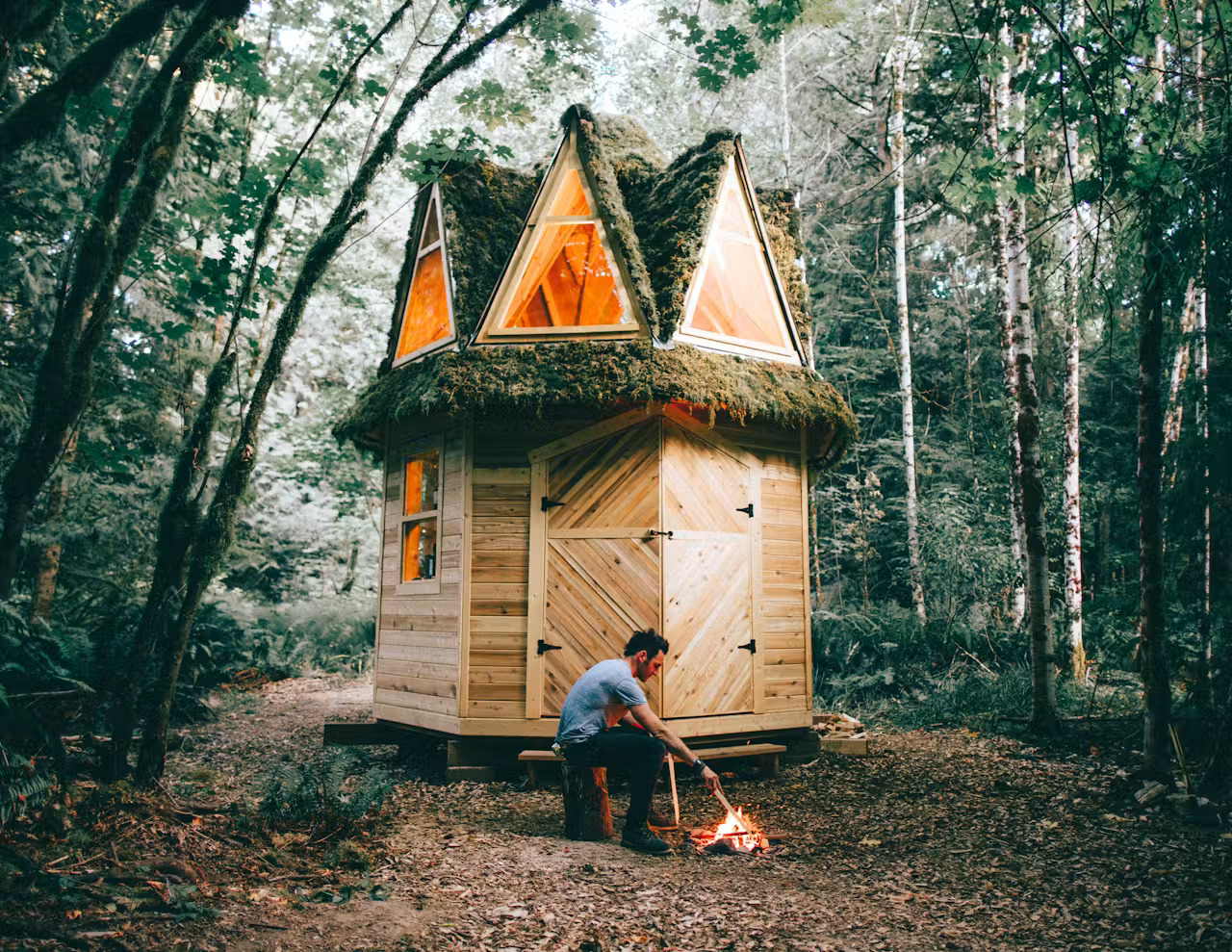
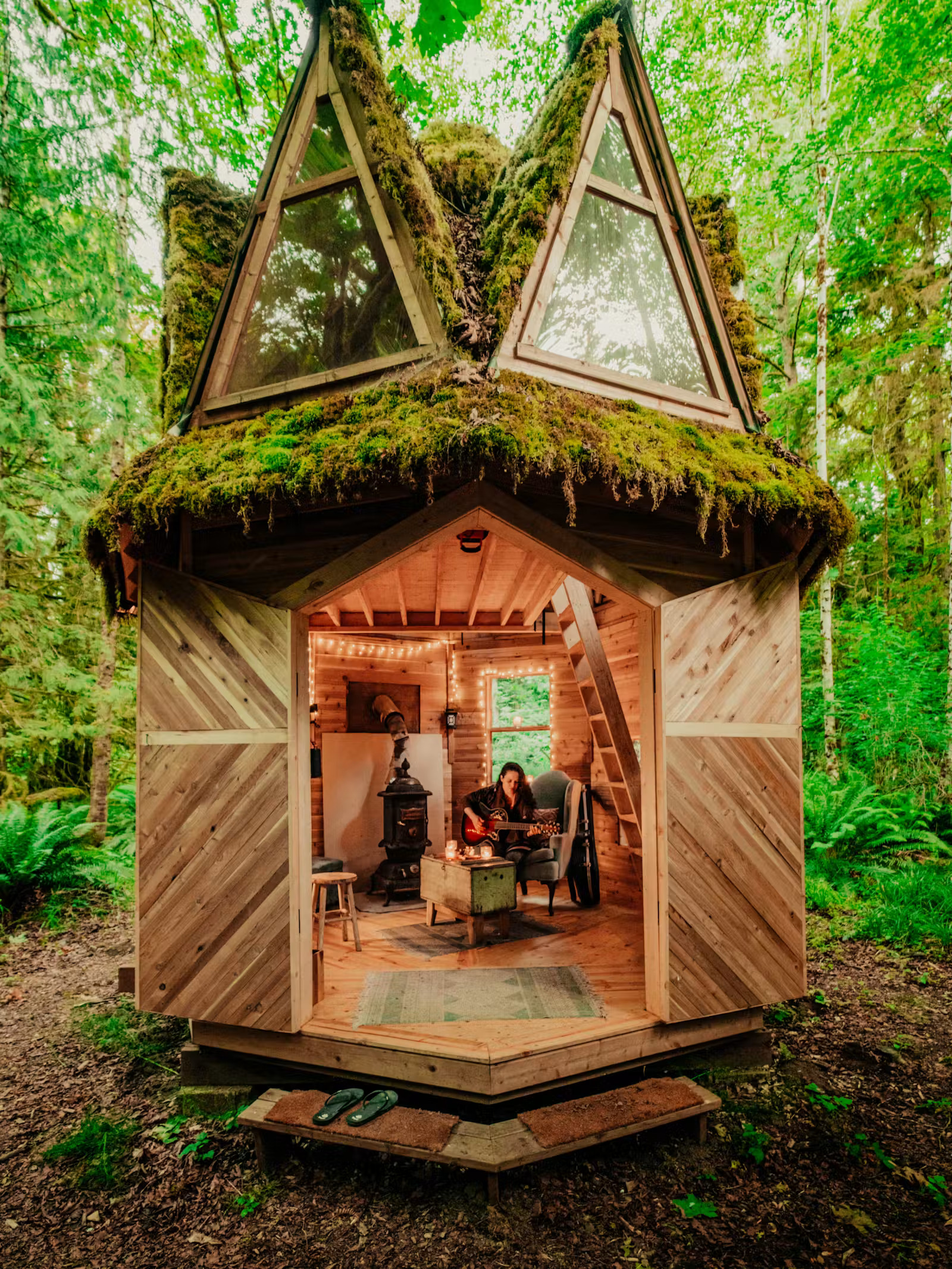
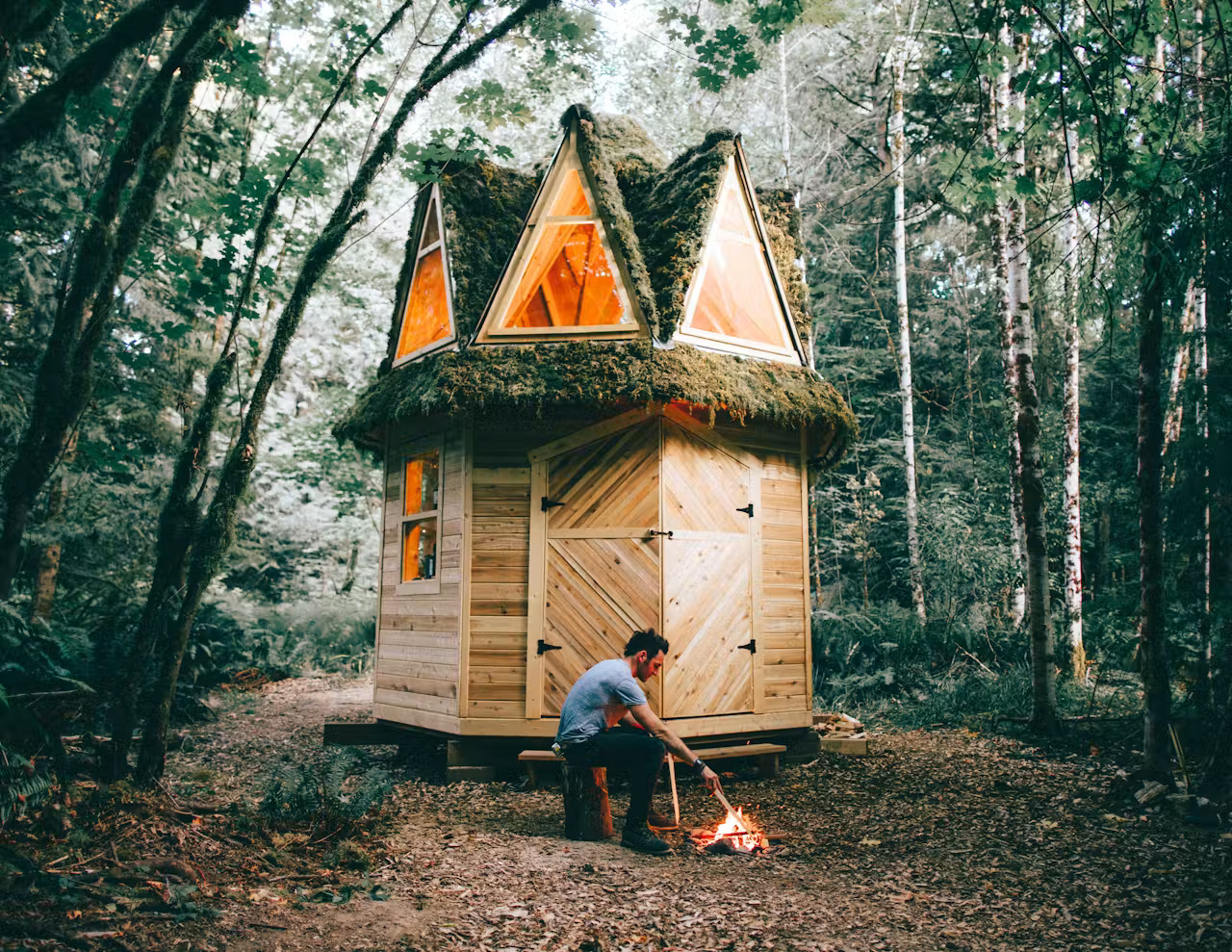
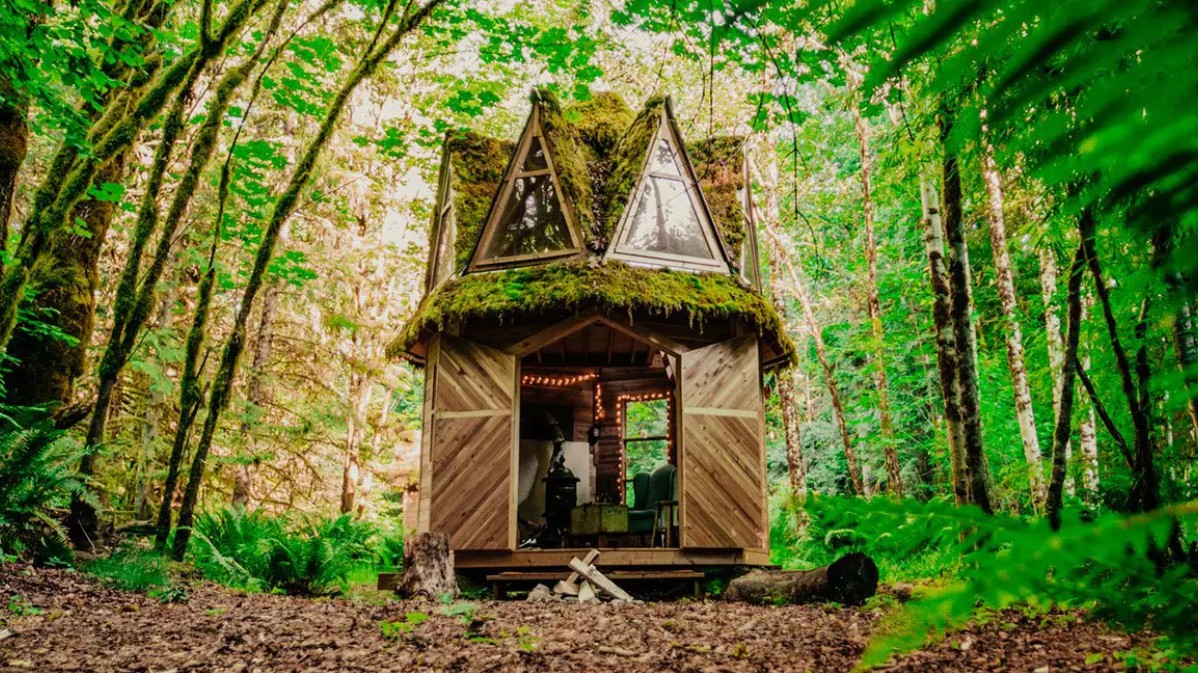
Cabin 3 is one of his most distinctive creations, featuring an octagonal design that feels both practical and whimsical. Built with help from his lifelong friend Wesley Daughenbaugh, the cabin has a 135-square-foot octagonal base topped with an octagonal pyramid roof.
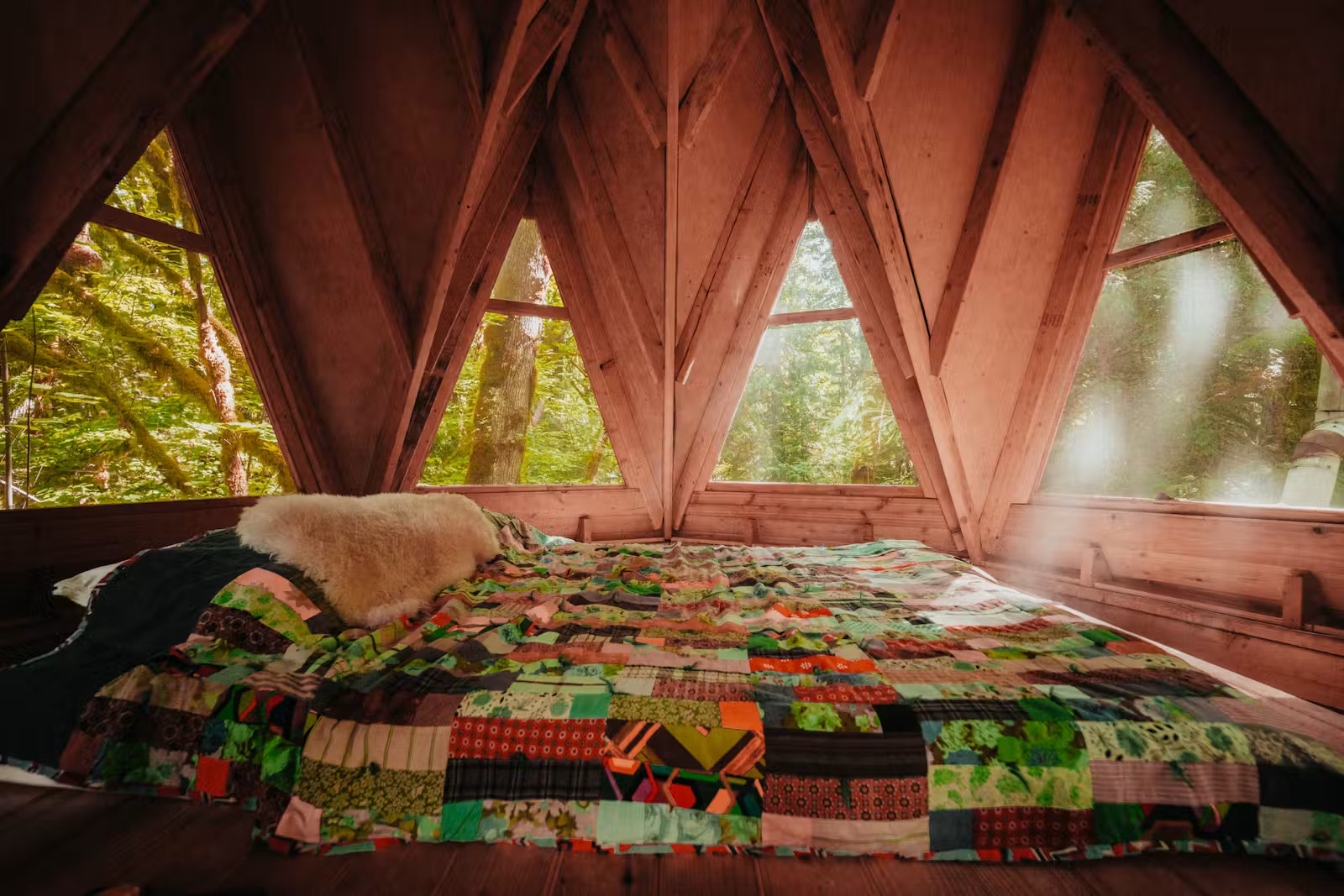
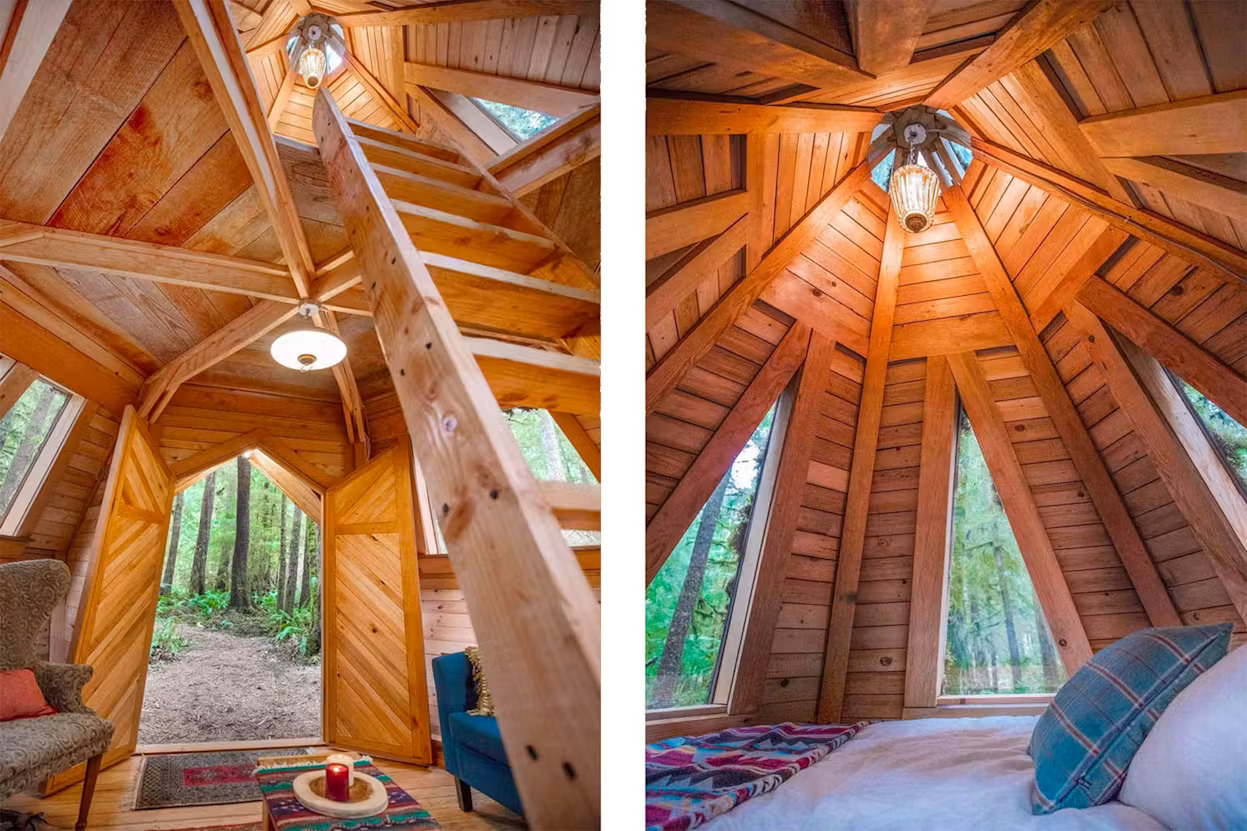
The unusual geometry is one of the cabin’s defining features. A roof plane with a central ridge extends outward to create eight 72-inch-tall dormers that run directly into the valleys of the roof, giving the small structure a dramatic silhouette while bringing more height and character to the interior.
Like many of Witzling’s cabins, Cabin 3 embraces materials and techniques that connect it to its natural surroundings. The roof uses the same approach he developed for Cabin 2: a layered system of metal roofing, chicken wire, and moss harvested from the property. The result is a weathered green roof that helps the cabin blend into the forest around it.
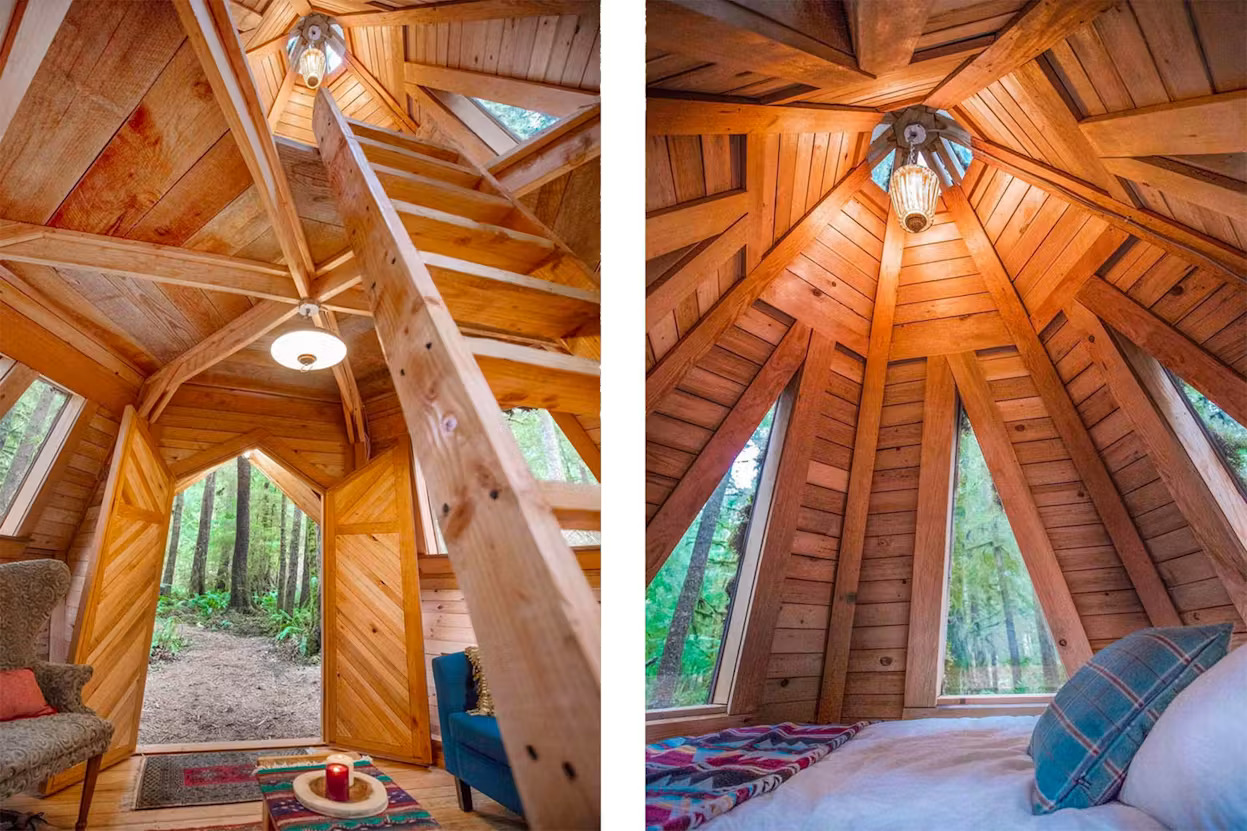
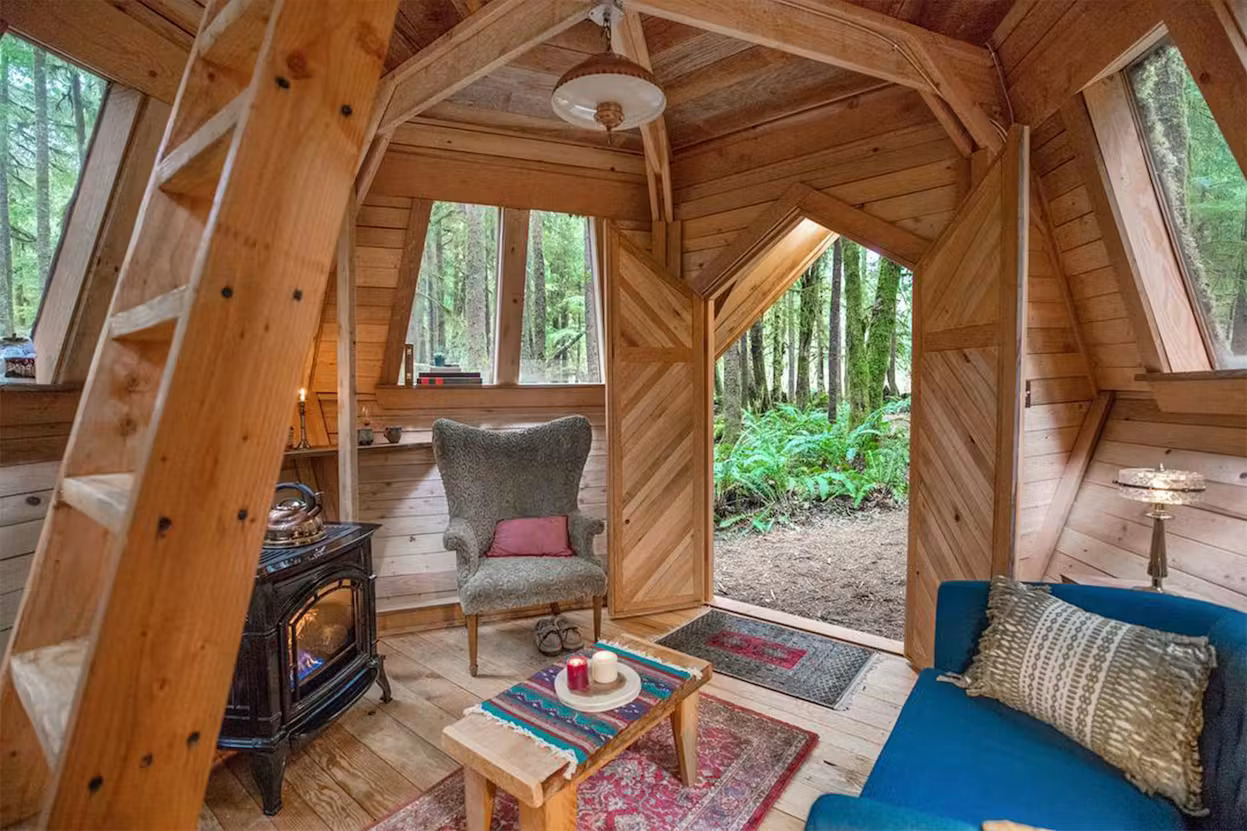
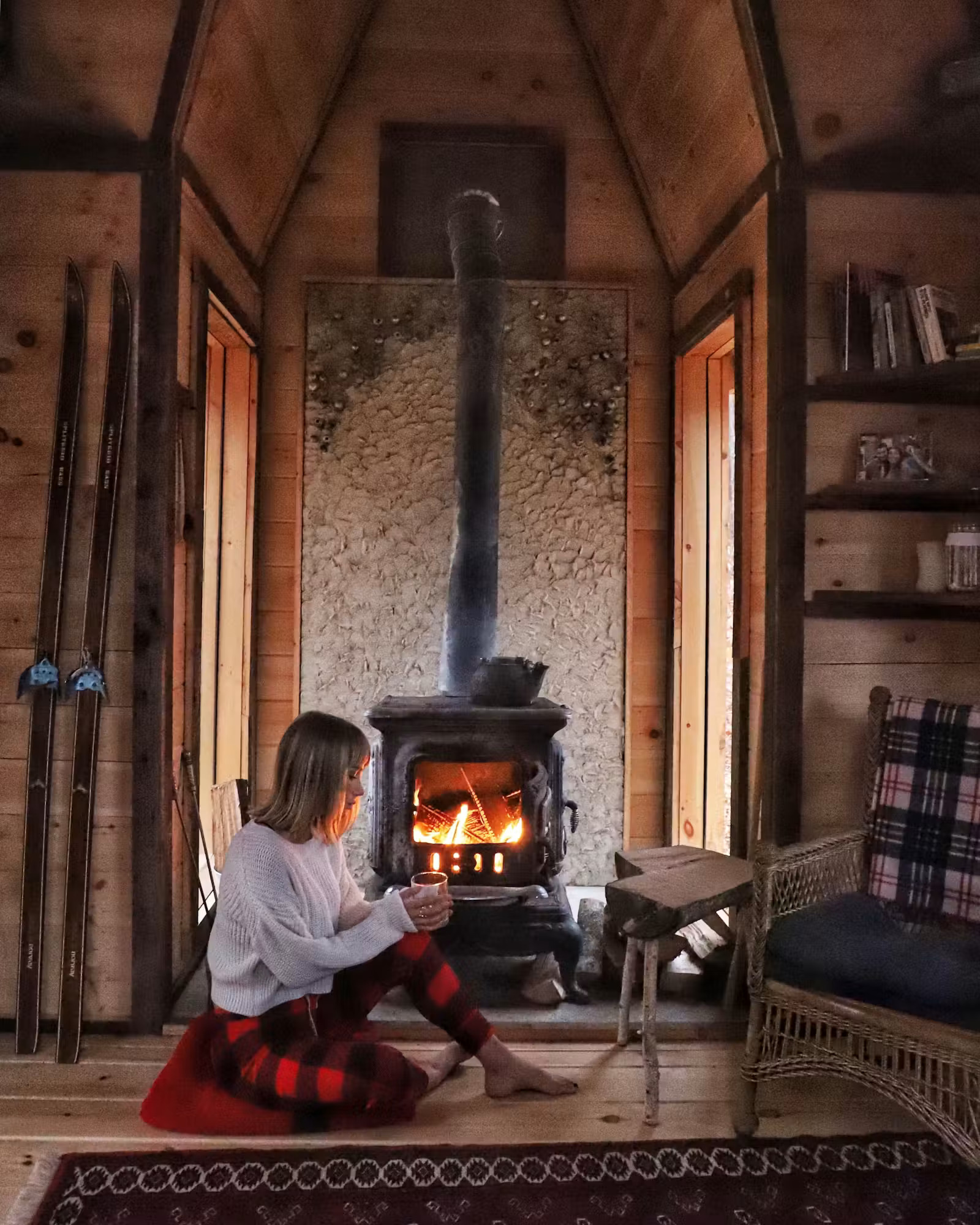
Inside, the compact space feels surprisingly open thanks to the tall ceiling created by the unique roof design. A wood-burning fireplace, warm wood finishes, and simple furnishings create a cozy retreat designed for slowing down and disconnecting from everyday life.
Witzling’s approach to cabin building has always been about more than creating small structures. Inspired by childhood forts, fantasy homes, and his architect father’s love for handmade houses, he builds what he calls “livable sculptures” using salvaged materials whenever possible.
His cabins are also designed to live off the grid, relying on simple systems rather than modern conveniences. Power comes from a 12-volt DC system with deep-cycle batteries, water is collected from natural sources, and composting toilets help reduce the need for traditional utilities.
At just over 100 square feet, Cabin 3 proves that a tiny home does not need to be minimal or ordinary. With its unusual shape, moss-covered roof, and handmade details, it feels like a place designed not just to live in, but to escape to.
Comments (0)
No comments yet. Be the first to share your thoughts.