
$50K Off-Grid Tiny Home Generates Power, Collects Water, and Grows Food
Andrea | 08/02/2026
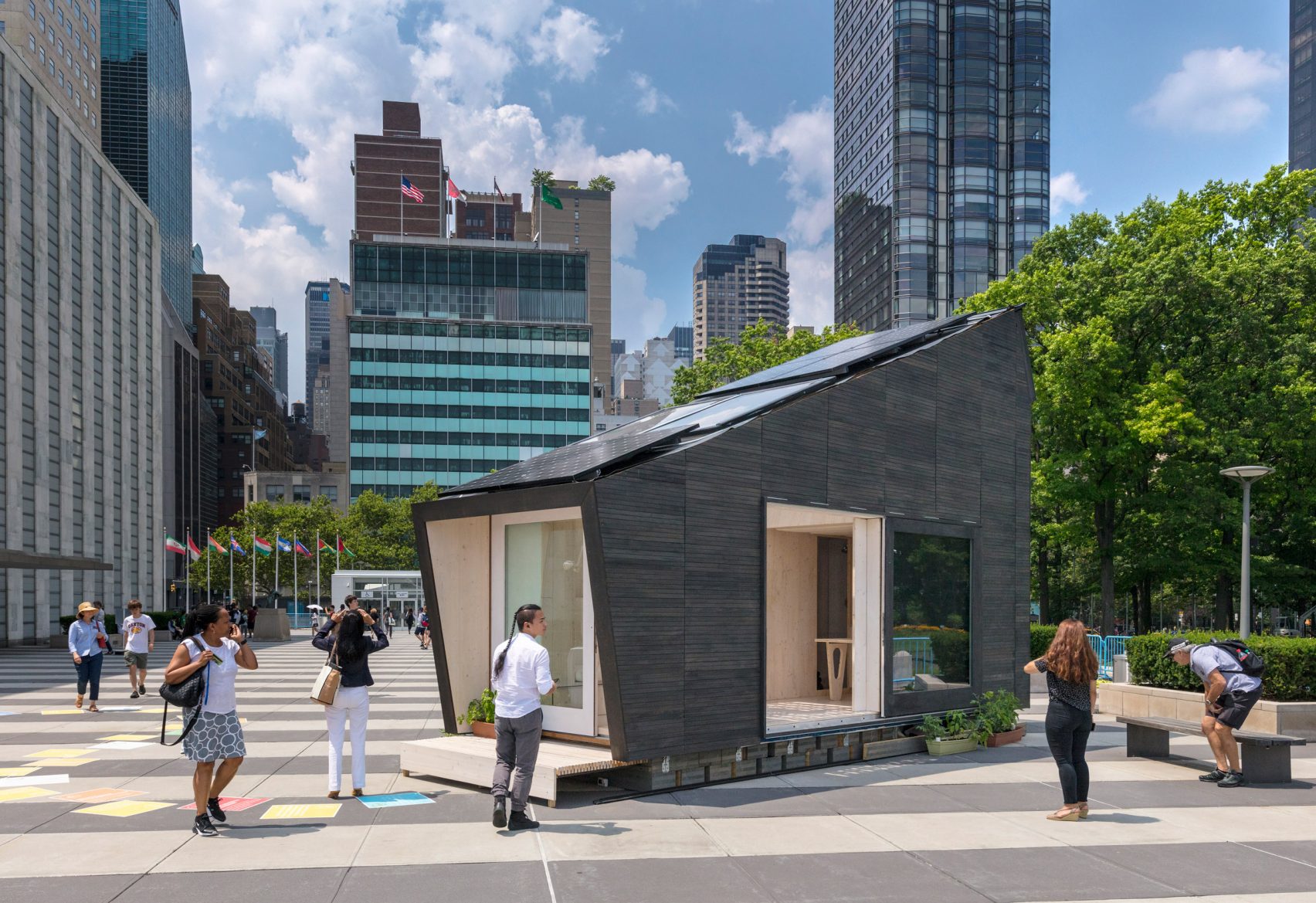
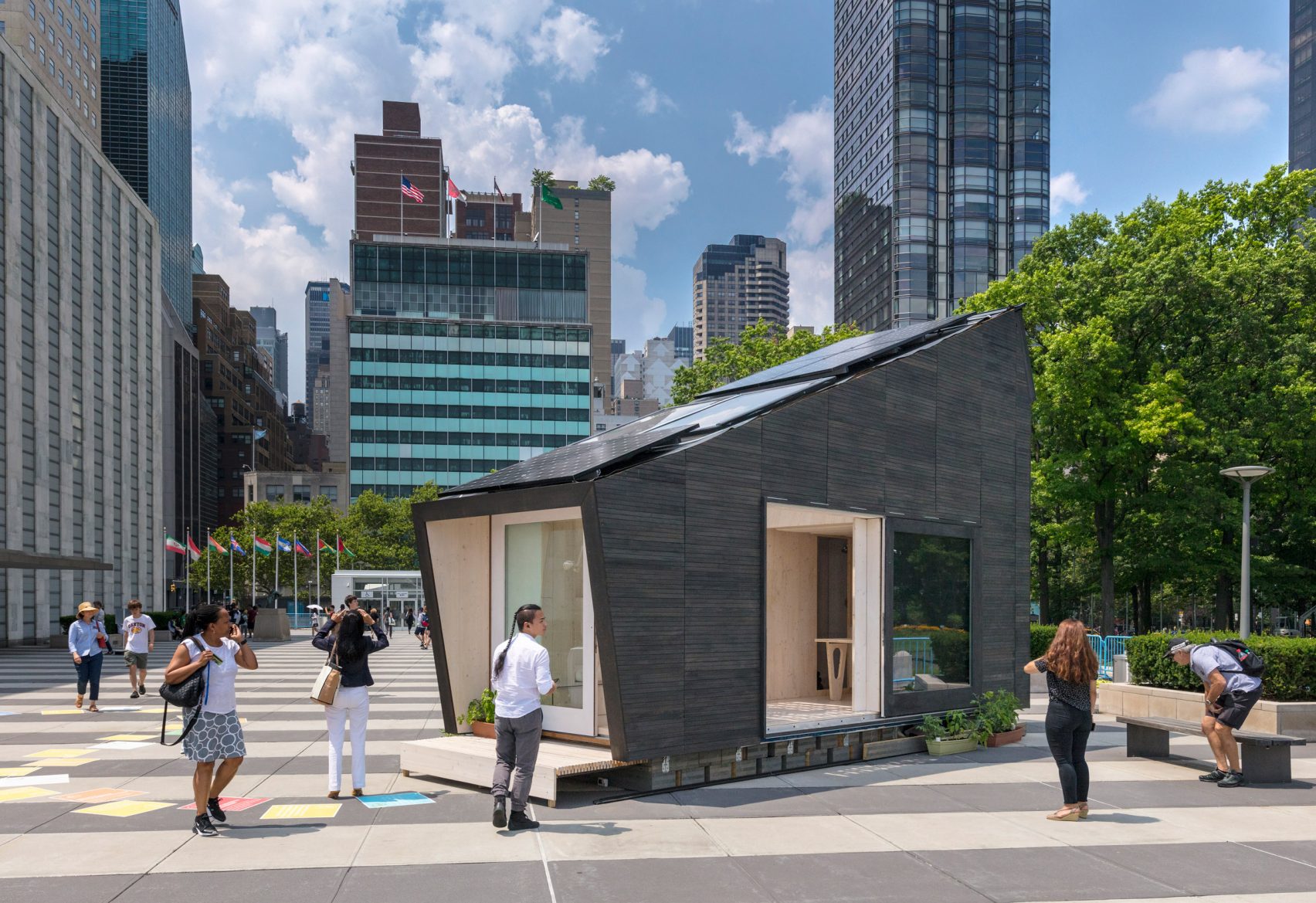
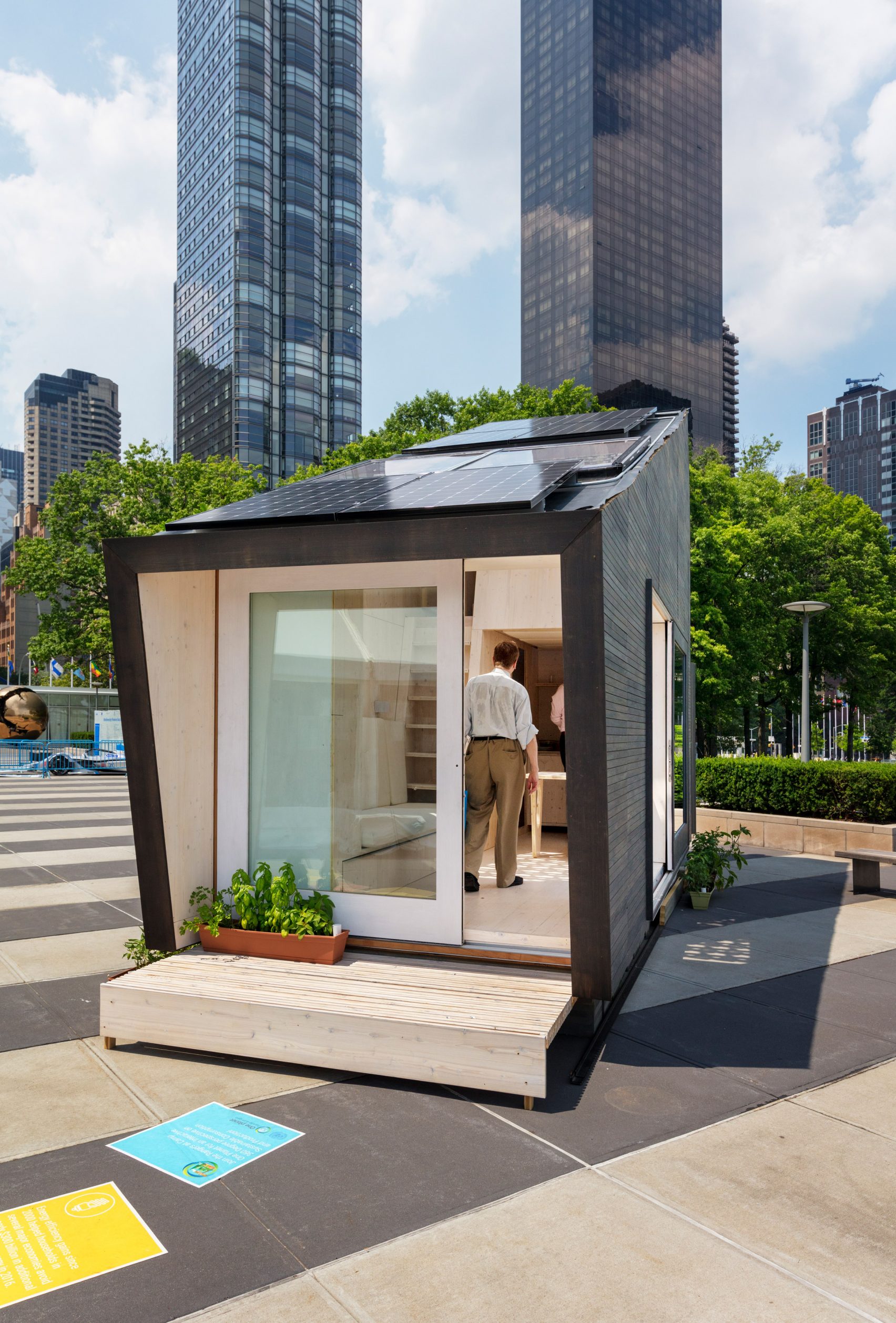
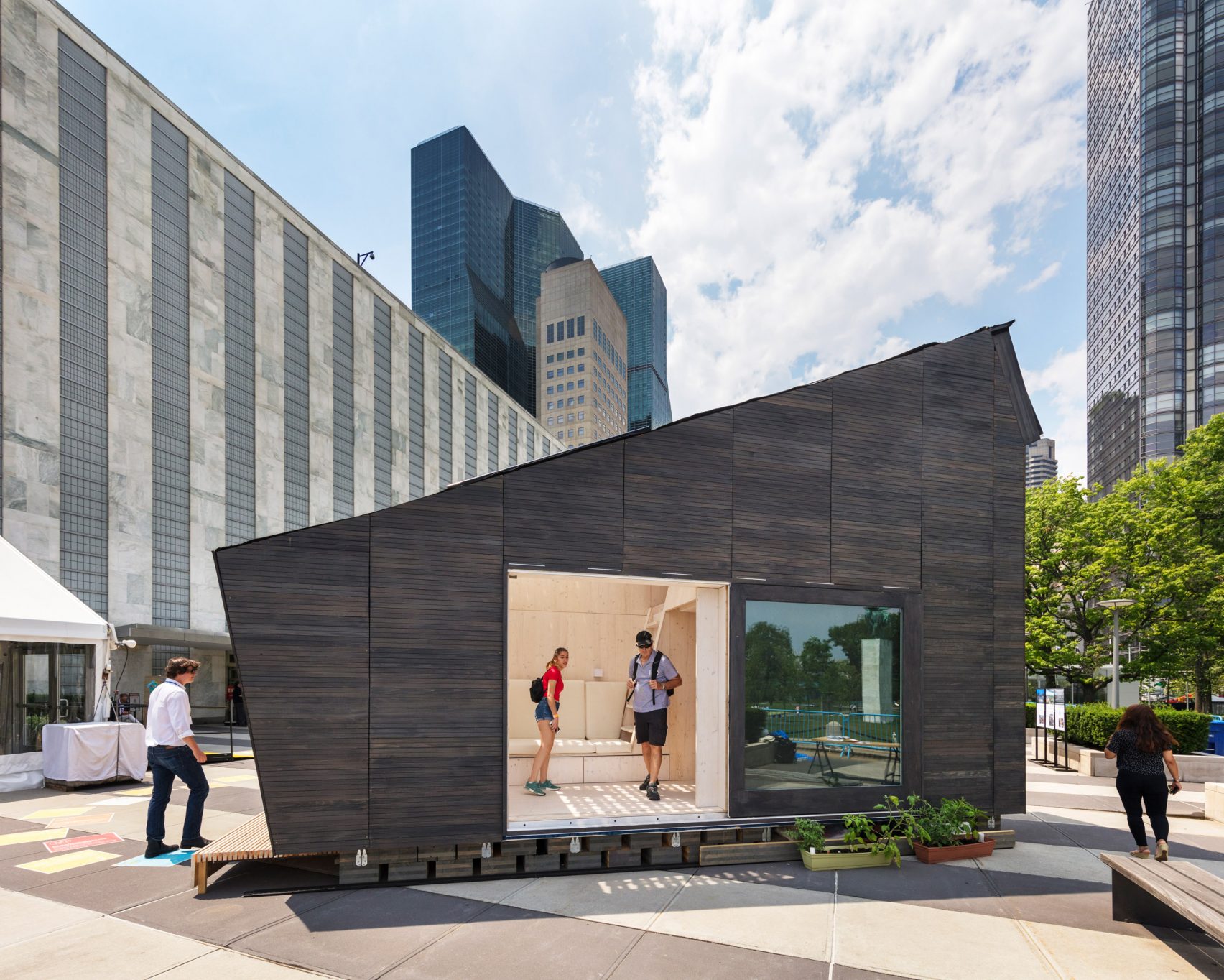
What if a tiny home could generate its own power, collect its own water, clean its own air, and even grow food? That's exactly the idea behind the Ecological Living Module (ELM), an innovative 230-square-foot prefab created by Gray Organschi Architecture and researchers from Yale University.
Commissioned by the United Nations Environment Programme and UN-Habitat, the ELM was designed as more than just another tiny house. It's a prototype that explores how sustainable, affordable housing could help address both the global housing shortage and climate change.
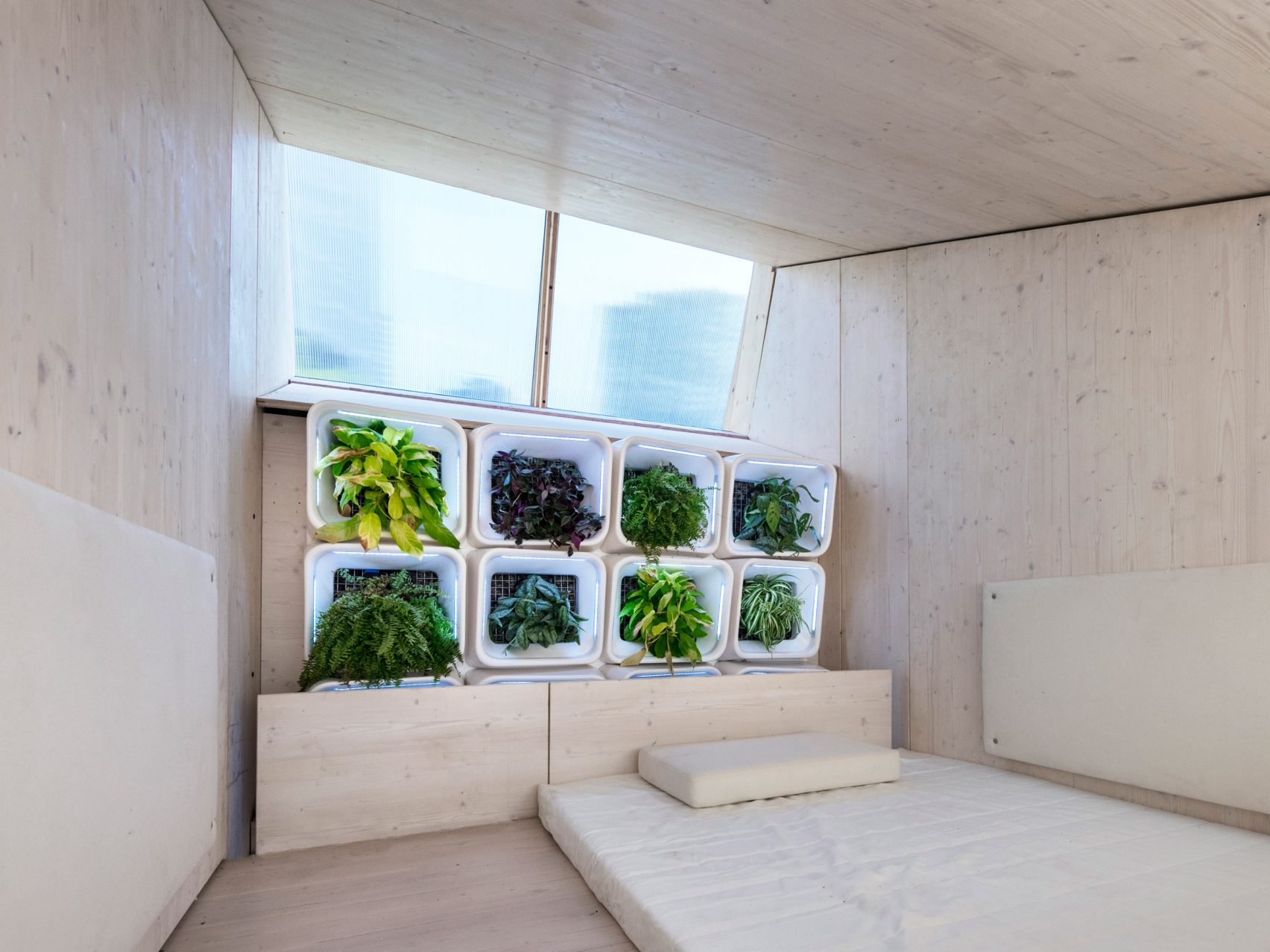
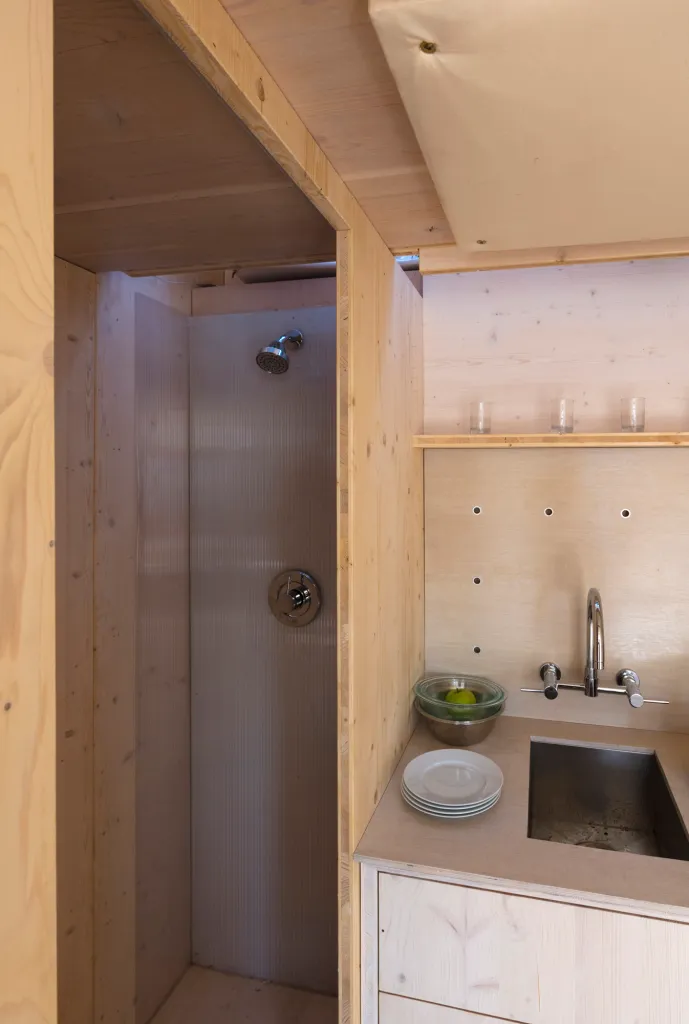
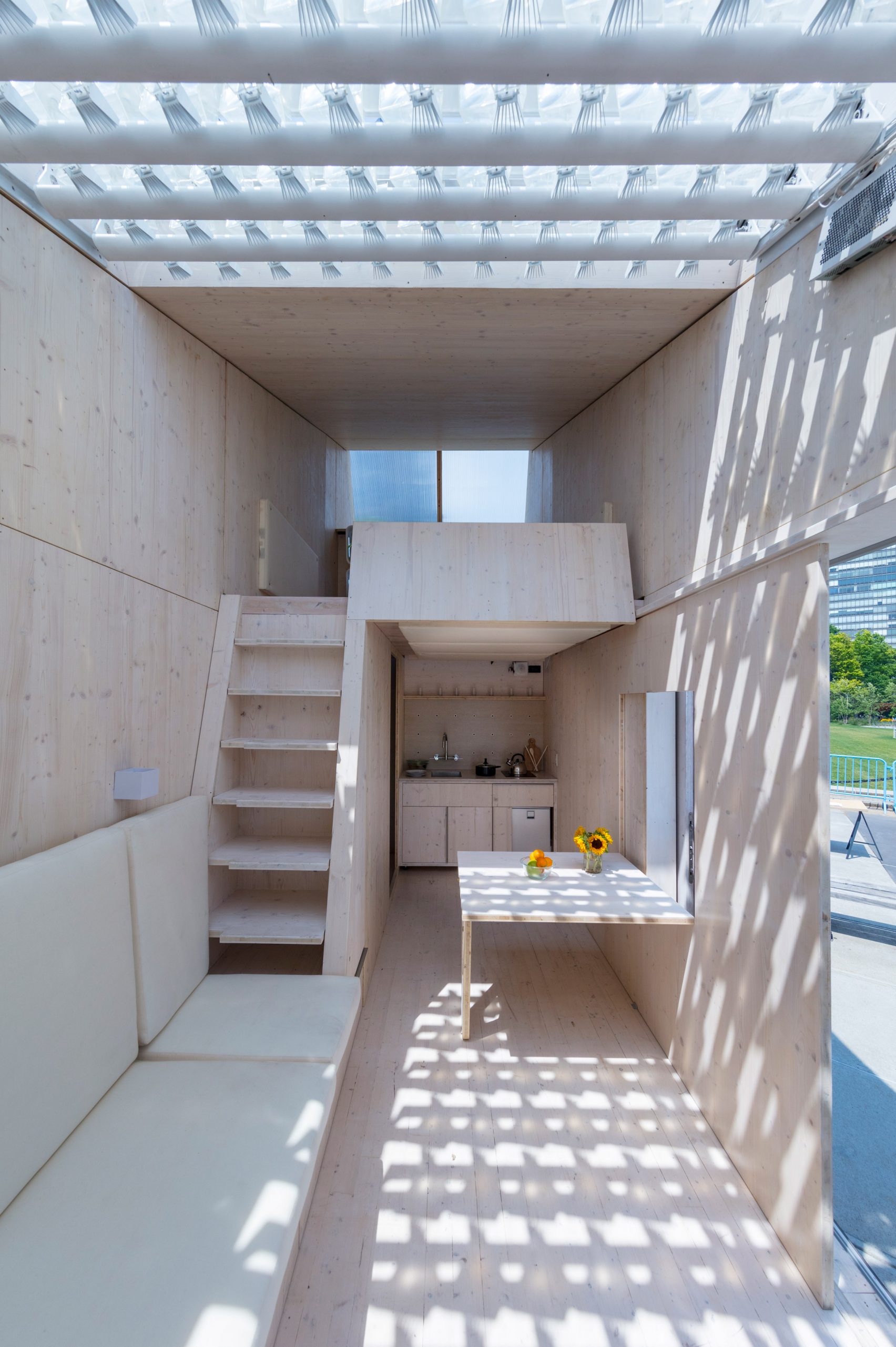
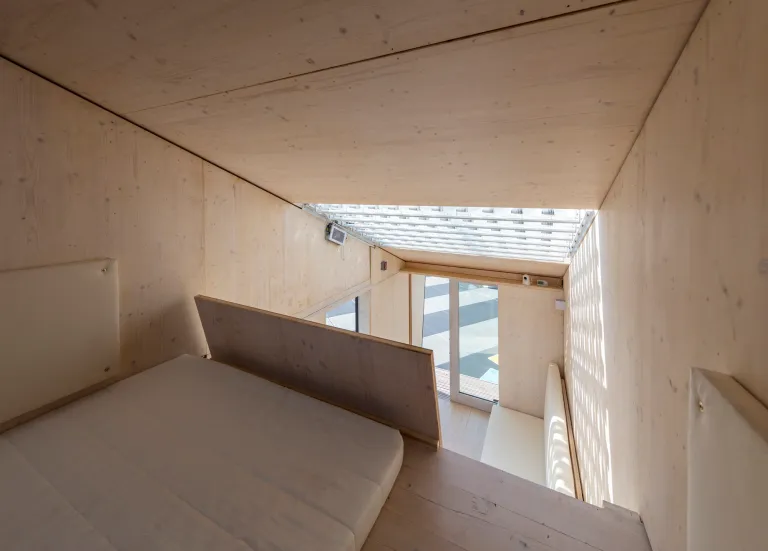
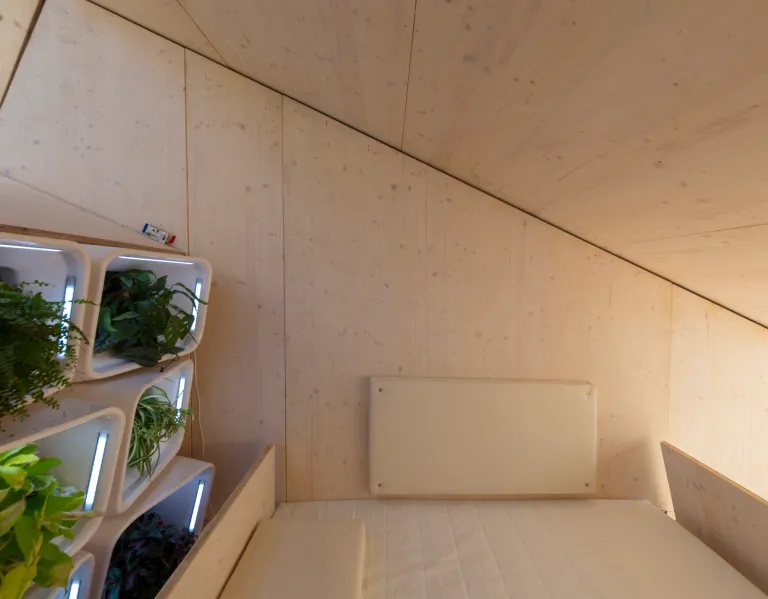
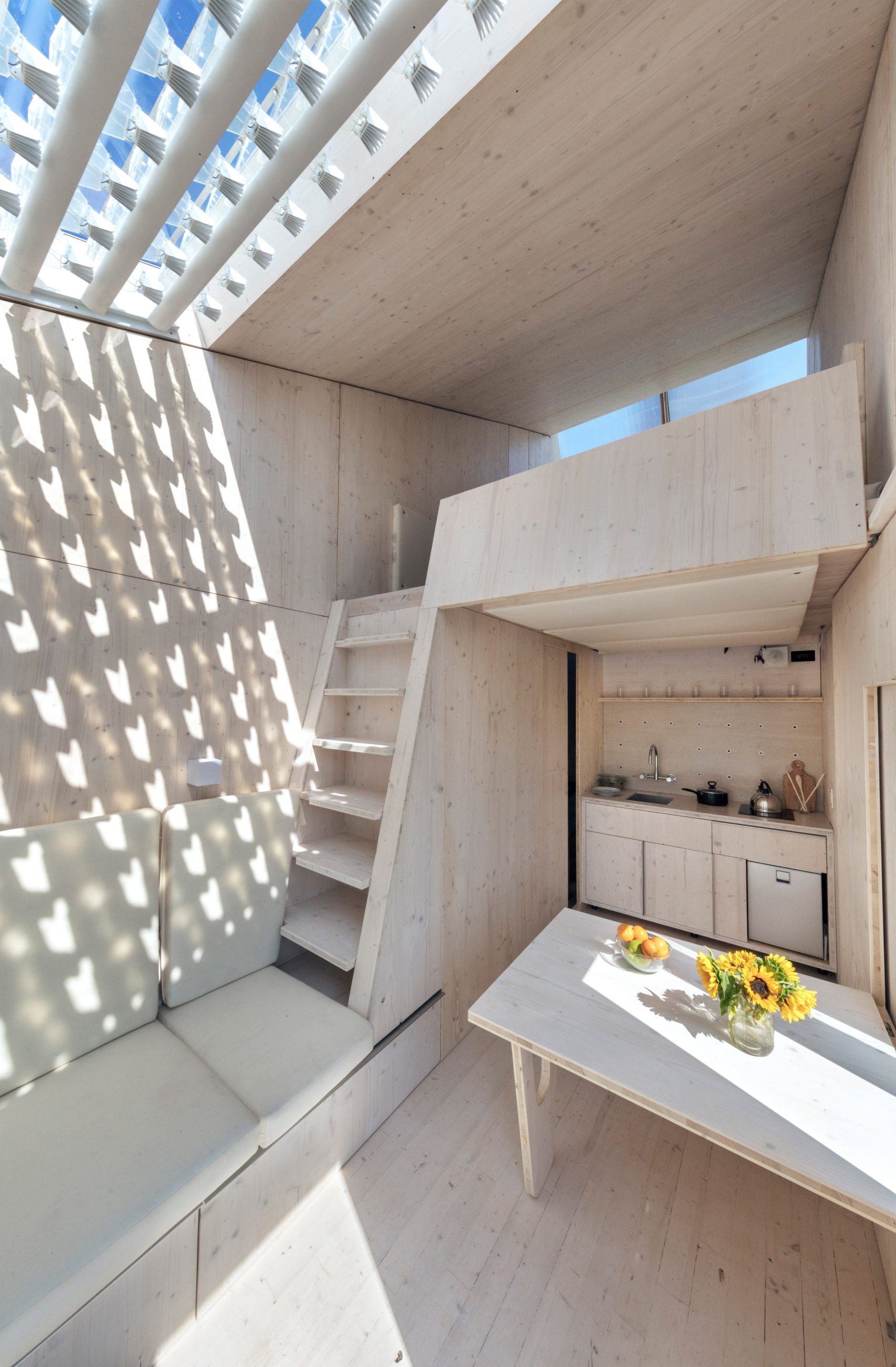
Despite measuring just 230 square feet (21 sq m), the off-grid dwelling comfortably accommodates up to four people. Inside, you'll find a compact kitchen, bathroom with a composting toilet, living area, and a loft sleeping space beneath a dramatic 16-foot sloping ceiling that improves natural ventilation by drawing warm air upward.
The home is built primarily from engineered timber, including cross-laminated timber (CLT), laminated veneer lumber (LVL), and parallel strand lumber (PSL). Large sliding glass doors flood the interior with daylight while creating a stronger connection to the outdoors.
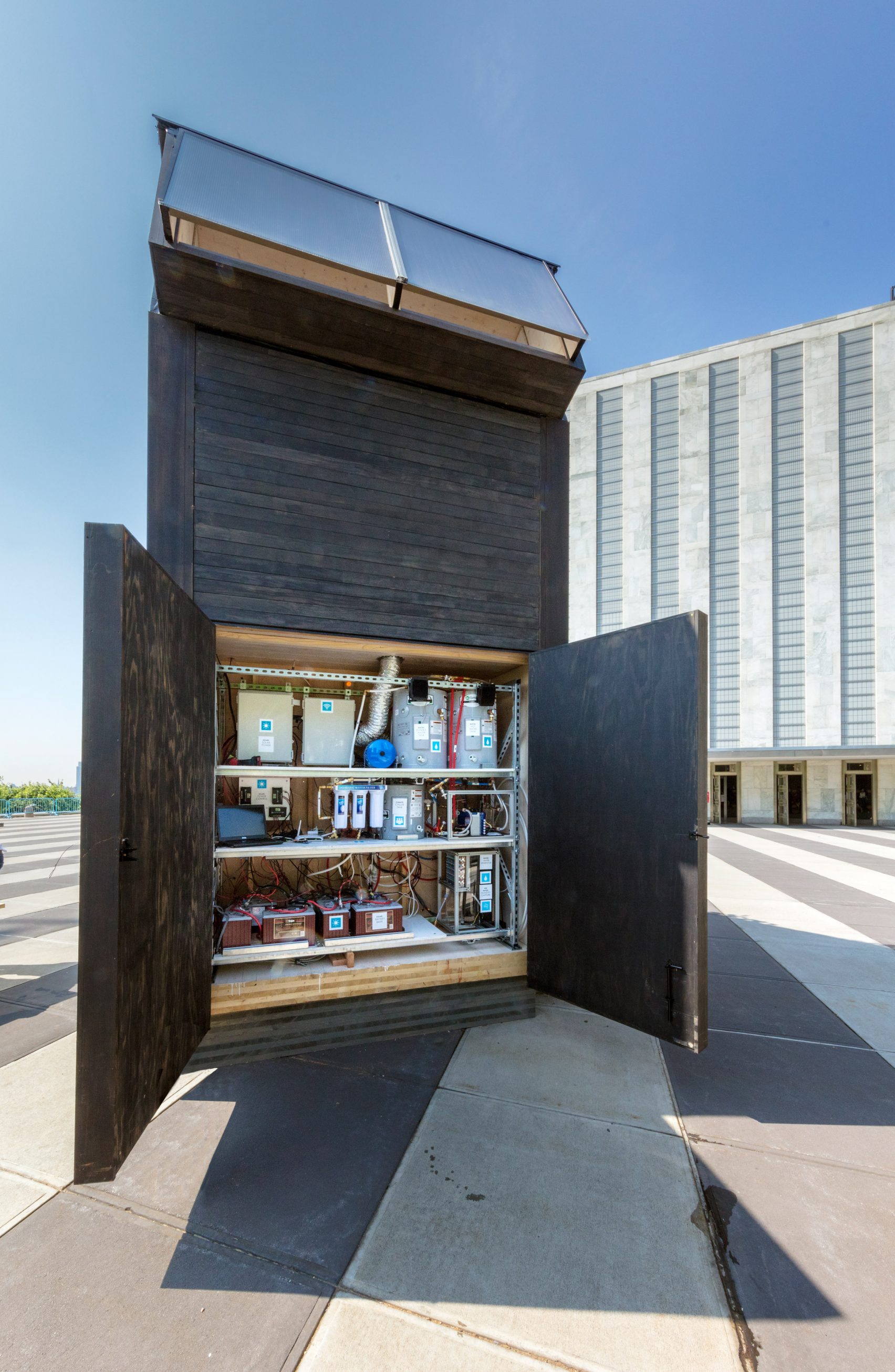
What really sets the ELM apart is its impressive collection of self-sustaining systems. Rooftop solar panels work alongside an advanced concentrating solar facade developed by HeliOptix, allowing the home to produce all of its own electricity while reducing heat gain and bringing diffused natural light indoors.
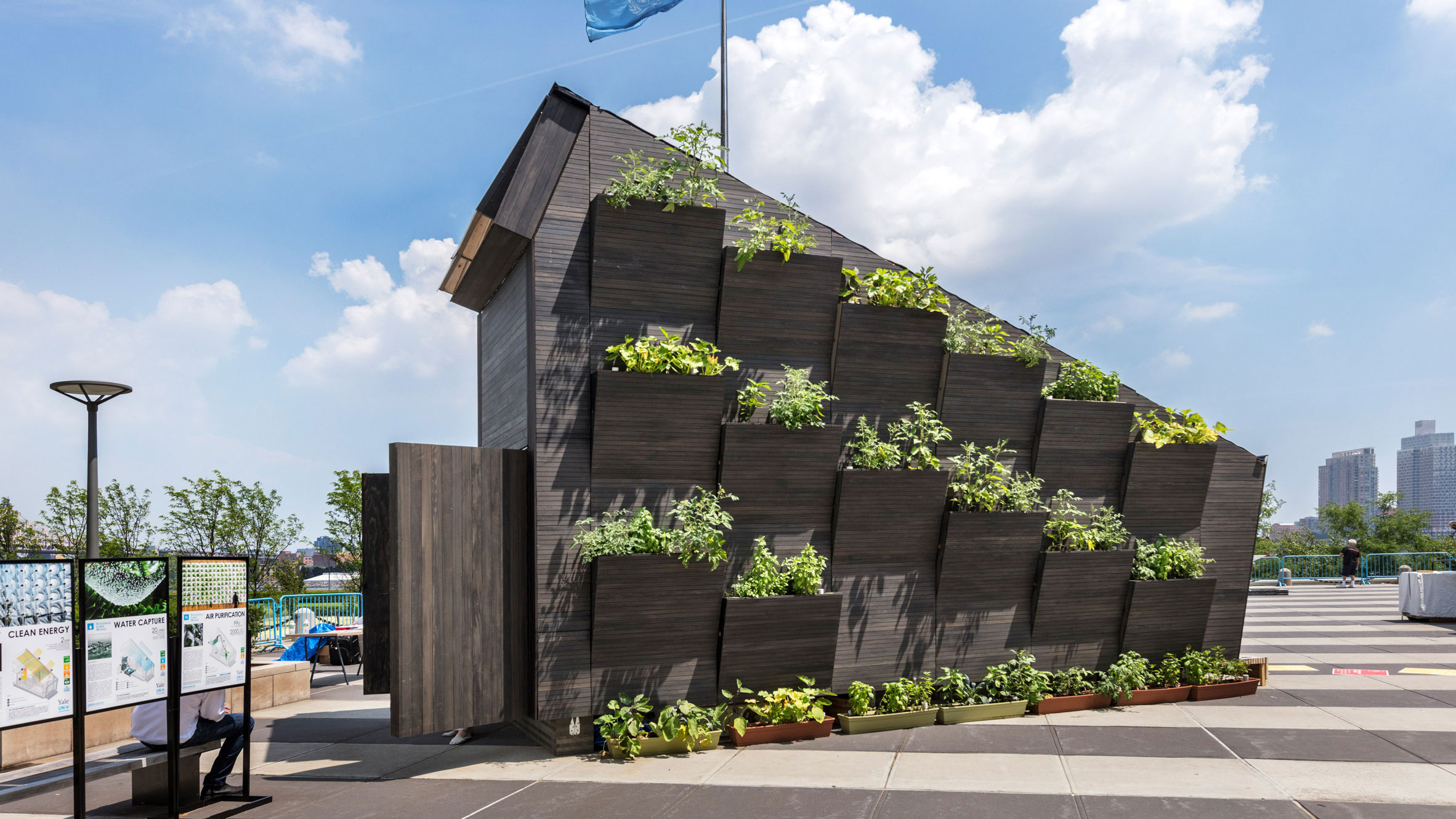
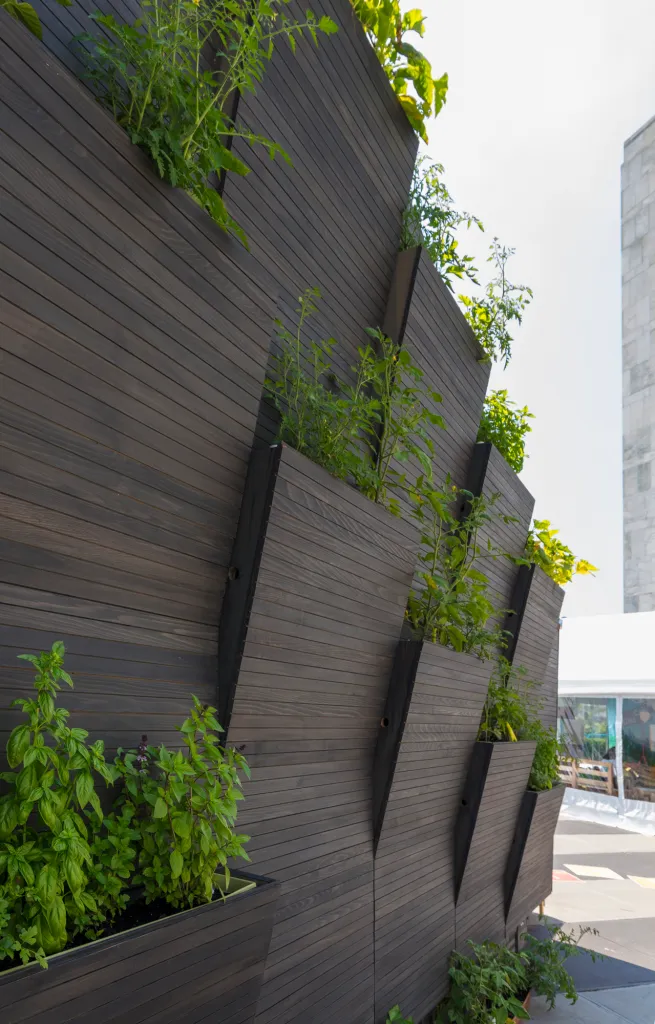
Water independence is another key feature. The system captures and filters rainwater for household use, while graywater is recycled to irrigate a built-in micro-farming wall. According to the design team, the growing system could provide up to 65% of a family's recommended annual fruit and vegetable servings when installed on both sides of the home.
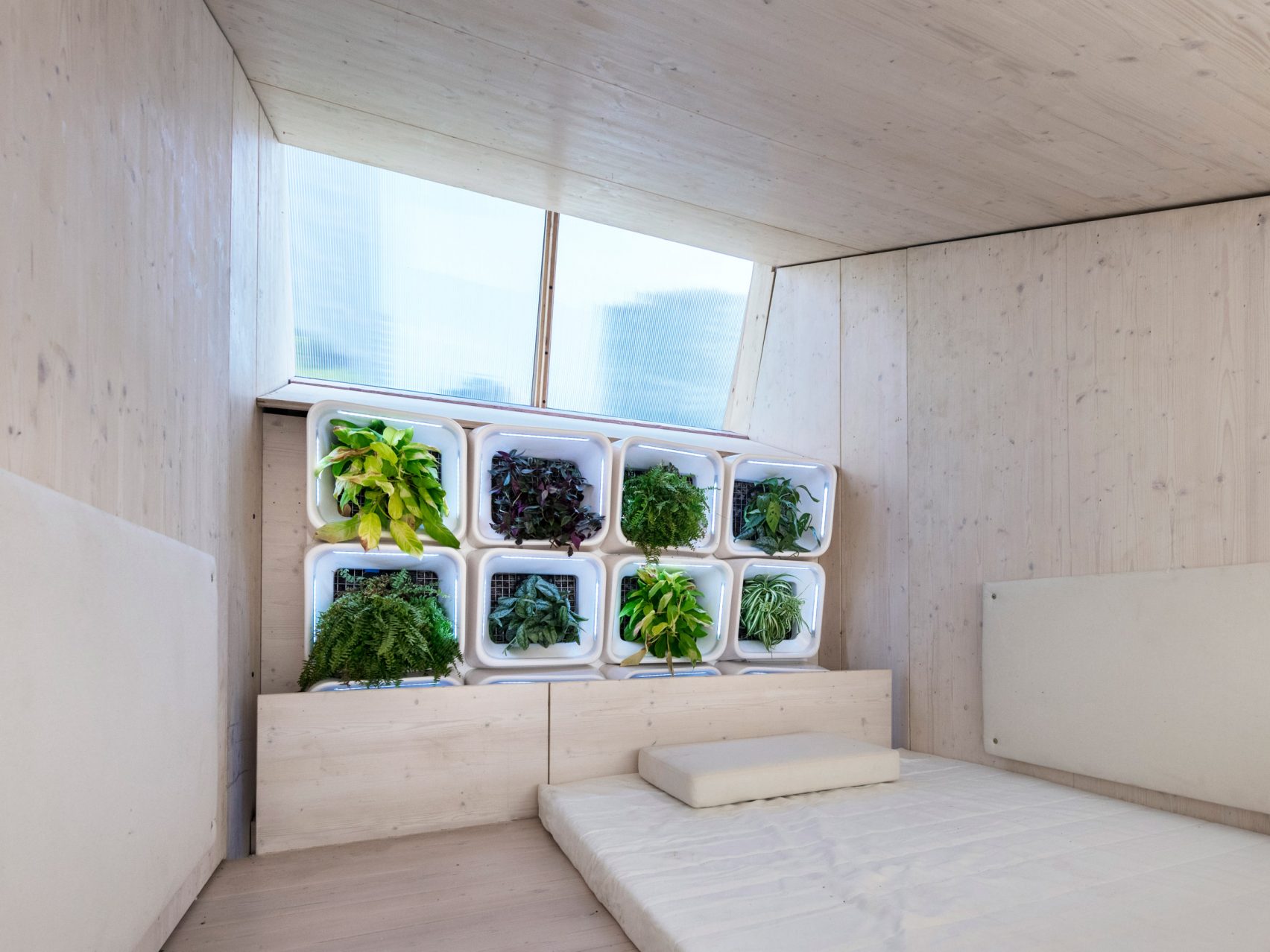
An integrated living plant wall also helps purify indoor air by filtering airborne pollutants while improving ventilation, creating a healthier indoor environment without relying heavily on mechanical systems.
Unlike many concept homes that remain purely experimental, the ELM was designed with scalability in mind. The prefabricated prototype was manufactured off-site in just four weeks, transported by truck to the United Nations headquarters in New York, and assembled in only three days.
The designers estimate that large-scale production could bring the price below $50,000 per unit, making the concept far more attainable than many high-end sustainable homes.
While the Ecological Living Module was originally developed as a demonstration project, it offers an exciting glimpse into how future tiny homes could become more self-sufficient, resilient, and environmentally responsible without sacrificing comfort.
Comments (0)
No comments yet — be the first to share your thoughts.