
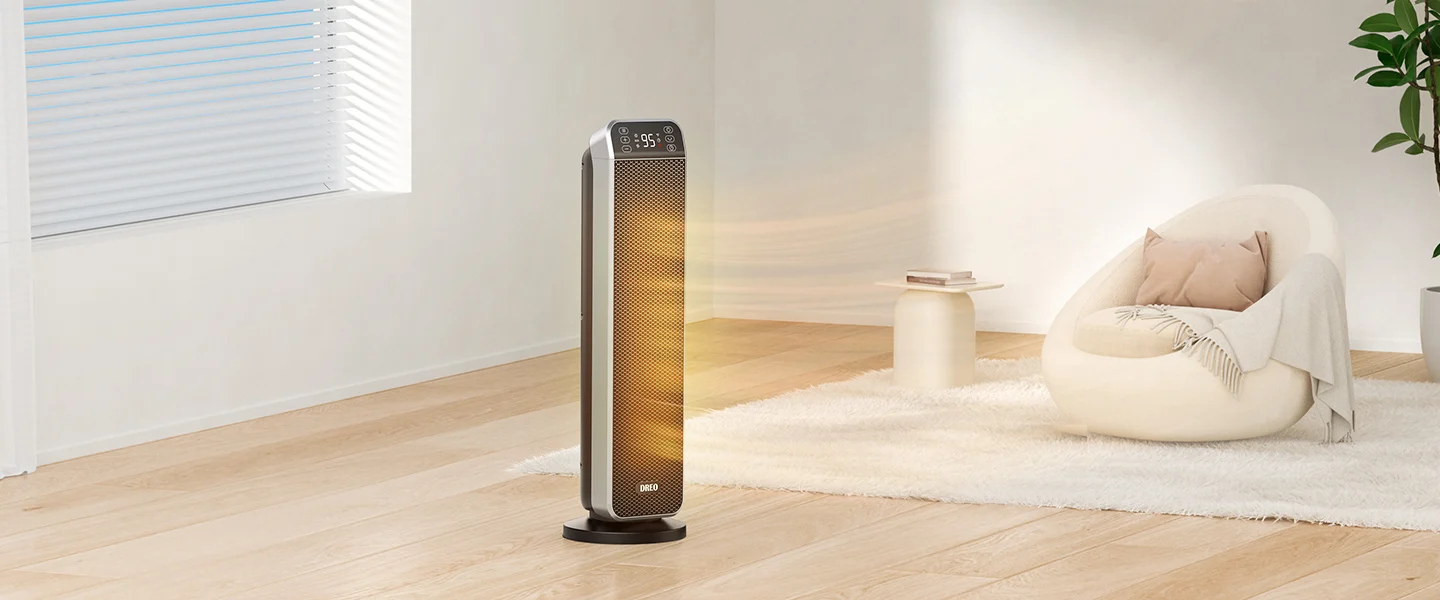
5 Best Compact Heaters for Tiny Homes
Andrea | 11/05/2026
Heating a tiny home through a Canadian winter takes a little planning. With limited floor space, you need something that delivers enough warmth without taking over the room. You also want a heater that is reasonably energy-efficient, easy to operate, and safe to use in a compact living environment.
The good news is that there are several options worth considering, from small ceramic space heaters to wall-mounted heating systems. The right choice depends on your home's insulation, layout, available power, and how much of the space you need to heat.
Here are some of the best compact heaters to consider for a tiny home.
Our Top Picks for Compact Tiny Home Heaters
1. Dreo Solaris Max (2nd Gen) Ceramic Space Heater
Best Overall
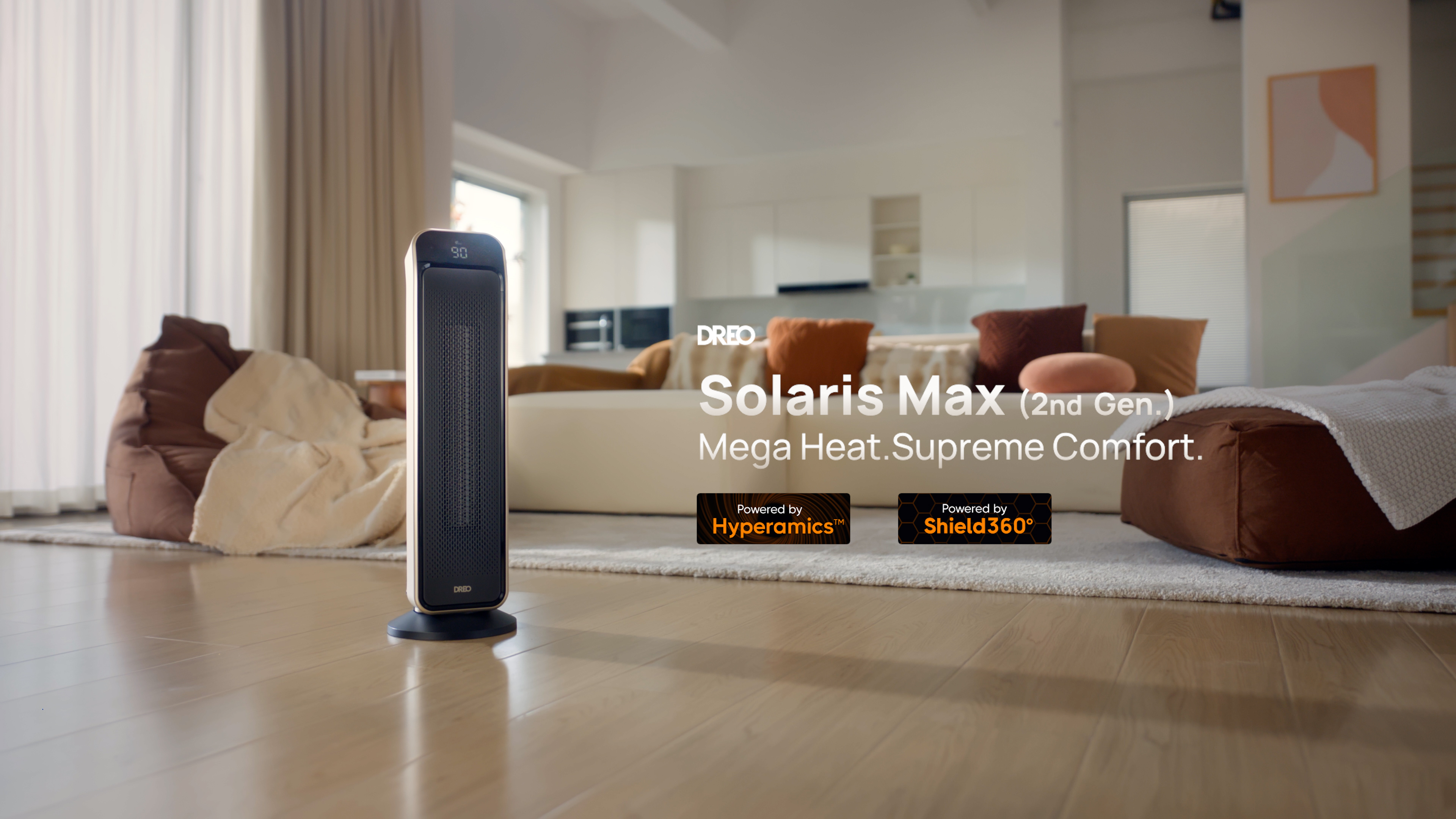
The Dreo Solaris Max is a good choice for tiny-home owners who want portable heating with convenient temperature controls. Its slim tower design takes up relatively little floor space, and its oscillating function helps distribute warm air across a room.
The heater offers up to 1,500 watts of heating power, several operating modes, an adjustable thermostat, and a remote control. It also has tip-over and overheat protection, along with a child lock.
At around 25 inches tall, it is larger than a desktop heater but still compact enough for most tiny-home living areas.
Key features:
1,000W to 1,500W heating settings
70-degree oscillation
Adjustable thermostat and ECO mode
Remote control and timer
Tip-over and overheat protection
Why we like it: It combines useful safety features and convenient controls with a relatively slim footprint. It's a practical option for warming a small living area or bedroom.
2. Dreo DR-HSH006 Portable Ceramic Space Heater
Best for Small Spaces

If floor space is especially limited, the Dreo DR-HSH006 is worth a look. This compact ceramic heater measures approximately 7.3 x 7.3 x 11 inches and weighs just over three pounds.
Despite its small size, it offers up to 1,500 watts of heating power. It also includes an adjustable thermostat, multiple operating modes, a timer, and remote control.
Its compact footprint makes it easy to move between a home office, bedroom, or small living area. It is also convenient to store when you don't need it.
Key features:
Up to 1,500W heating power
Compact tabletop-style footprint
Adjustable thermostat
Multiple heating modes
Remote control and 12-hour timer
Tip-over and overheat protection
Why we like it: It's a space-saving option for anyone who wants supplemental heat without adding another bulky appliance to an already small room.
3. De'Longhi Oil-Filled Radiator
Best for Steady, Quiet Heat
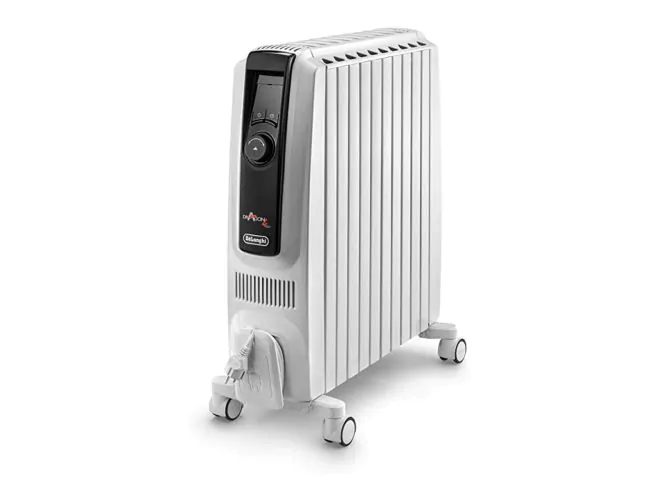
Oil-filled radiators are a good alternative to fan-based heaters, especially in bedrooms and quiet living spaces. They warm the surrounding air gradually and continue releasing heat for a while after switching off.
De'Longhi's oil-filled radiator range includes compact freestanding models with adjustable heat settings and thermostats. Some models also have programmable timers and wheels, making them easier to move around the home.
Unlike ceramic fan heaters, oil-filled radiators don't rely on a fan to distribute heat. This makes them a quieter option for people who find the constant airflow of portable heaters distracting.
Key features to look for:
Adjustable heat settings
Built-in thermostat
Overheat protection
Programmable timer, depending on model
Wheels or handles for easier movement
Why we like it: It provides a quieter heating experience and more gradual warmth, which can be useful in a small bedroom or living space.
4. Rinnai EX22DTP Direct-Vent Propane Wall Heater
Best for Permanent Heating
For tiny homes that need more than occasional supplemental heat, a direct-vent wall heater may be a better long-term solution.
The Rinnai EX22DTP is a propane-powered wall-mounted heater designed to provide supplemental or zone heating. It delivers between 8,200 and 20,700 BTU per hour and uses a direct-vent system that draws combustion air from outside and exhausts combustion gases outdoors.
Because it mounts on the wall, it doesn't take up valuable floor space. It also has electronic temperature controls and compatibility with a Wi-Fi thermostat.
This is a more substantial investment than a portable electric heater, but it can be a practical option for a properly designed and professionally installed tiny-home heating system.
Key features:
8,200 to 20,700 BTU heating output
Propane fuel
Direct-vent installation
Wall-mounted design
Electronic temperature control
Wi-Fi thermostat compatibility
Why we like it: It offers a more permanent heating solution without using up floor space. Its direct-vent design also keeps combustion exhaust outside the living area.
Important: This is not a DIY plug-in heater. Have a qualified gas professional assess the installation, fuel supply, clearances, and local code requirements.
5. Dreo Portable Ceramic Space Heater
Best for Supplemental Heating
A smaller ceramic heater can be useful when you only need to warm one area at a time. Dreo's portable ceramic heater range includes compact models designed for bedrooms, offices, and other small indoor spaces.
These heaters use a ceramic heating element and fan to circulate warm air. Depending on the model, you can get adjustable temperature settings, multiple heat modes, a timer, and built-in safety shutoffs.
For tiny-home owners, this type of heater is particularly useful when you don't want to run the main heating system just to warm a small area.
Before buying, check the exact model's dimensions, wattage, safety certification, and available features. Dreo sells several models with different specifications.
Key features to look for:
Compact footprint
Adjustable thermostat
Tip-over protection
Automatic overheat shutoff
Timer and multiple heat settings
Why we like it: A portable ceramic heater gives you flexibility to direct heat where you need it, rather than warming the entire home.
What to Consider When Choosing a Heater for Your Tiny Home
Not every space heater is suitable for a tiny home. A model that works well in a conventional bedroom might be too powerful, too bulky, or impractical for a smaller living space.
Here are a few things to consider before buying.
1. Heating Capacity
Start by looking at the size of the area you want to heat. A small personal heater may be enough for a compact bedroom or workspace, while an open-plan tiny home may need a more substantial heating system.
Electric space heaters commonly offer up to 1,500 watts of heating power. However, a heater's advertised room coverage is only a guideline. Insulation, ceiling height, windows, air leaks, and outdoor temperatures all affect how well it performs.
Don't assume that buying a more powerful heater will automatically make your home warmer or more efficient.
2. Energy Consumption
Electric heaters convert nearly all the electricity they consume into heat at the point of use. However, running costs still depend on the heater's wattage, electricity rates, and how long you use it.
For example, a 1,500W heater running continuously for one hour consumes 1.5 kWh of electricity.
If you're living off-grid or relying on solar power and batteries, this is particularly important. A high-wattage heater can drain a battery bank quickly, especially during cloudy winter weather when solar production is limited.
Look for adjustable heat settings and a thermostat so the heater doesn't need to run at full power all the time.
3. Size and Placement
Floor space is valuable in a tiny home, so look for a heater that fits your layout.
Consider:
Compact or vertical designs
Wall-mounted options for permanent installations
Lightweight models that are easy to move
Cord placement that won't create a tripping hazard
Adequate clearance from furniture, curtains, bedding, and other combustible materials
A heater should never be squeezed into a tight corner just to keep it out of the way.
4. Safety Features
Safety should be a priority, particularly in a small home where furniture, bedding, and other combustible materials may be close together.
For portable electric heaters, look for:
Tip-over protection
Automatic overheat shutoff
A stable base
A recognized Canadian electrical safety certification, such as CSA, cUL, or cETL
Keep portable heaters at least one metre away from combustible materials, unless the manufacturer's instructions require an even greater clearance. Plug them directly into a suitable wall outlet, never a power bar or extension cord. Turn them off and unplug them before leaving home or going to sleep.
If you choose a fuel-burning heater, make sure the exact model is approved for the intended indoor application. Direct-vent systems are generally a better fit for permanent indoor heating than unvented portable combustion heaters.
Install working smoke alarms and carbon monoxide alarms as required for your home and heating system.
5. Insulation and Air Sealing
Even a good heater will struggle if your tiny home loses heat through poorly insulated walls, floors, ceilings, windows, and doors.
Before investing in a more powerful heating appliance, check for drafts and improve insulation where practical. Weatherstripping around doors, sealing gaps, insulating exposed plumbing areas, and using properly fitted window coverings can all help reduce heat loss.
A well-insulated tiny home needs less energy to stay comfortable, which is especially helpful during long Canadian winters.
Are Electric or Propane Heaters Better for Tiny Homes?
Both can be useful, but they serve different purposes.
Feature | Electric Space Heater | Direct-Vent Propane Heater |
|---|---|---|
Installation | Usually plug-and-play | Professional installation |
Floor space | Uses some floor space | Wall-mounted options available |
Indoor emissions | No combustion emissions | Exhaust vented outdoors |
Power requirements | Requires electricity | Requires propane; some models also need electricity |
Portability | Usually portable | Generally permanent |
Best for | Supplemental heating | Primary or more substantial zone heating |
For most tiny-home owners with a reliable electrical supply, a portable electric heater is the simplest option for supplemental warmth.
A direct-vent propane heater is worth considering if you need a more permanent heating solution or want to reduce reliance on electricity. However, installation costs, fuel storage, ventilation, and local building and gas codes need to be considered.
Frequently Asked Questions
What is the best heater for a tiny home?
For supplemental heating, a compact ceramic electric heater with adjustable temperature controls, tip-over protection, and overheat shutoff is a practical choice. For a permanent heating system, consider a properly sized direct-vent wall heater.
Can a 1,500W heater warm a tiny home?
It depends on the home's size, insulation, layout, and outdoor temperature. A 1,500W heater may comfortably warm a small, well-insulated room, but it may not be enough to heat an entire open-plan tiny home during a Canadian winter.
Are space heaters expensive to run?
Running costs depend on wattage, electricity rates, and operating time. A 1,500W heater running for eight hours uses 12 kWh. Using a thermostat and lower heat settings can help manage consumption.
Can I use a propane heater inside my tiny home?
Only use a propane heater indoors if the specific model is approved for that application and its installation and ventilation requirements can be met. Never assume that a heater marketed for camping, patios, or outdoor use is suitable for an enclosed living space.
For permanent heating, a professionally installed direct-vent propane heater is generally a more appropriate option than an unvented portable heater.
Are ceramic heaters better than oil-filled radiators?
Neither is automatically better. Ceramic heaters warm a space quickly and are easy to move, while oil-filled radiators provide gradual, quiet heat. Your choice depends on how quickly you want warmth, how much noise you can tolerate, and how you plan to use the heater.
Final Thoughts
The best compact heater for your tiny home depends on how you use your space and how much heating you actually need.
For everyday supplemental warmth, a compact ceramic heater is an affordable and convenient option. An oil-filled radiator is worth considering if quiet, steady heat is more important. If you're building or upgrading a tiny home for year-round living, a permanently installed direct-vent heater may be a better long-term investment.
Whichever option you choose, don't overlook insulation, proper placement, and electrical or fuel requirements. In a tiny home, a little planning goes a long way toward staying comfortable through winter without sacrificing valuable living space.
Comments (0)
No comments yet. Be the first to share your thoughts.