
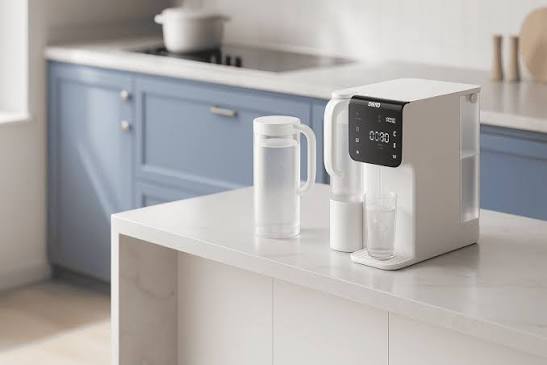
3 Best Countertop Water Filters for Tiny Homes and Small Kitchens
Andrea | 11/22/2026
A countertop water filter is a simple way to improve your drinking water without installing a bulky system under the sink. It's a practical option for tiny homes, cabins, apartments, and rental properties where counter space and plumbing access are limited.
The good news is that you don't need a complicated setup. Some models connect directly to your kitchen faucet, while others work as standalone appliances. Here are three countertop water filters worth considering, along with what makes each one a good fit for a small home.
Best Countertop Water Filters at a Glance
Water Filter | Best For | Filter Type |
|---|---|---|
DREO Countertop Reverse Osmosis System | More thorough filtration without plumbing | Reverse osmosis |
Waterdrop CTF-01 | Everyday filtration on a budget | Faucet-connected carbon |
Amwater 5-Stage Countertop Filter | A low-cost filtration option | Faucet-connected multi-stage |
1. DREO Countertop Reverse Osmosis System
Best for: More thorough filtration without permanent installation
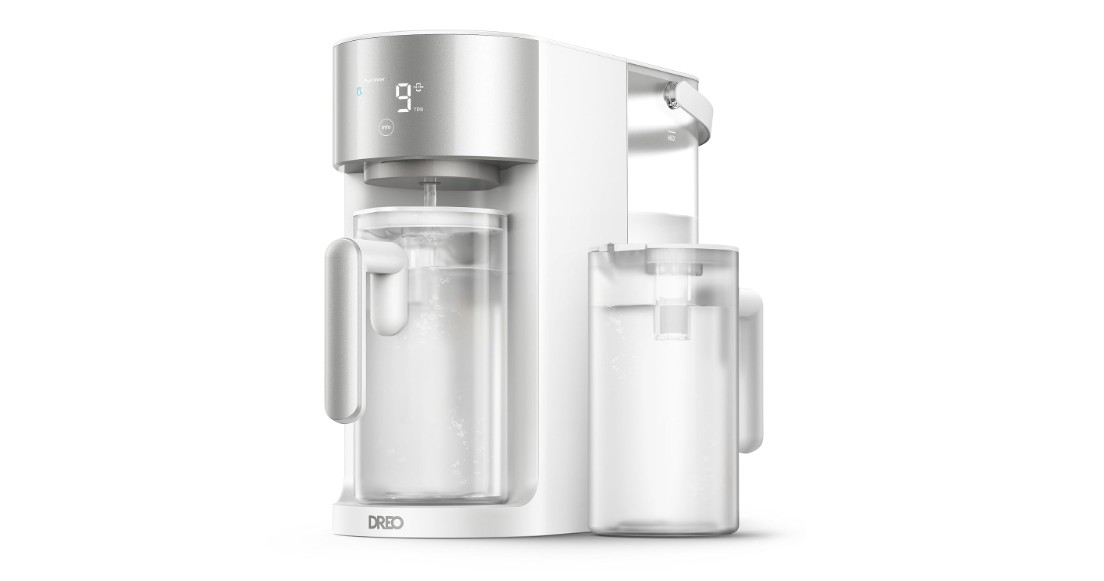
The DREO countertop reverse osmosis system is a good option for anyone who wants more than basic taste and odour filtration. It sits on the counter, uses a refillable water tank, and doesn't need to connect to your kitchen faucet or plumbing.
Reverse osmosis uses a semipermeable membrane to reduce dissolved substances that many standard carbon filters don't remove, including certain heavy metals, nitrates, and fluoride. This makes it worth considering for people who want a broader level of filtration.
The trade-off is that reverse osmosis systems need electricity, take up more counter space, and produce wastewater. You'll also need to refill the tank and keep up with replacement filters.
What to like:
No plumbing or faucet connection required
Reverse osmosis filtration
Convenient for rental properties and small homes
Self-contained countertop design
Keep in mind: Check the replacement filter prices and wastewater ratio before buying. You'll also need enough counter space and an outlet nearby.
Check the DREO Countertop RO System on Amazon.ca
2. Waterdrop CTF-01 Countertop Water Filter
Best for: Simple, everyday water filtration
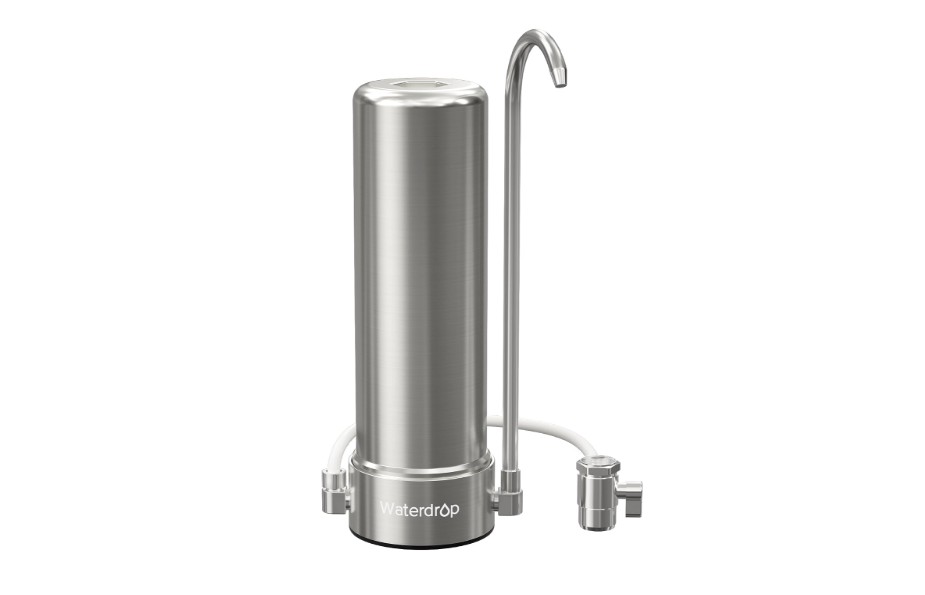
If you want something smaller and less expensive than a reverse osmosis appliance, the Waterdrop CTF-01 is worth a look.
This faucet-connected filter uses a stainless steel housing and a multi-stage carbon filtration process. It is designed to reduce chlorine, sediment, and other substances that can affect water taste and odour.
Unlike a standalone RO system, it doesn't need electricity or a separate water reservoir. Filtered water comes directly from the connected faucet, making it convenient for everyday drinking and cooking.
Its biggest limitation is compatibility. The filter attaches to the faucet's aerator, so it may not work with pull-down sprayers or taps with non-standard fittings.
What to like:
Compact design that leaves most of the counter free
No electricity required
Direct access to filtered water
Stainless steel housing
Keep in mind: Check your faucet before ordering. This type of filter is mainly for improving water quality and taste, not removing every dissolved contaminant.
Check the Waterdrop CTF-01 on Amazon.ca
3. Amwater 5-Stage Countertop Water Filter
Best for: A budget-friendly option
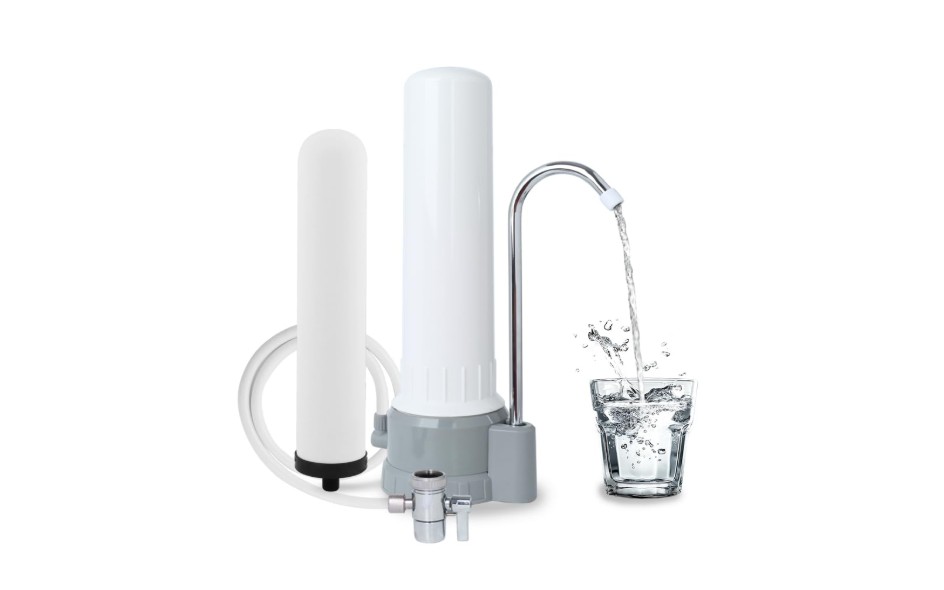
The Amwater 5-stage countertop filter is another faucet-connected option for people who want a simple filtration setup without spending much.
It uses a multi-stage filter design and has a washable filter component, which may help reduce ongoing replacement costs. Like the Waterdrop, it connects to a compatible kitchen faucet rather than operating as a separate appliance.
The main appeal is its lower upfront cost. It's worth comparing with other faucet-connected filters if you mainly want to improve the taste and smell of your tap water.
What to like:
Affordable entry-level option
No electricity needed
Faucet-connected design
Washable filter component
Keep in mind: Don't assume that five filtration stages mean better performance. Check the manufacturer's specific contaminant-reduction claims and look for independent certification before relying on it for a particular water-quality concern.
Check the Amwater Countertop Filter on Amazon.ca
What to Look for in a Countertop Water Filter
Before choosing a model, think about your kitchen setup and the kind of filtration you actually need.
1. Check your available counter space
A faucet-connected filter takes up less room than a standalone reverse osmosis appliance. If your kitchen is particularly small, measure the space beside your sink before buying.
2. Check the filtration claims
Not all filters remove the same contaminants. Some mainly reduce chlorine and improve taste, while reverse osmosis systems can reduce a wider range of dissolved substances.
Look for independent certification, such as NSF/ANSI standards, and check the exact contaminants covered by the certification. A general claim that a filter is NSF-tested isn't the same as certification for every contaminant it advertises.
3. Consider replacement filter costs
The purchase price is only part of the cost. Check how often cartridges need replacing, how much replacements cost, and how easy they are to find in Canada.
4. Make sure it fits your faucet
Faucet-connected filters usually need a removable, threaded aerator. They may not fit pull-down or pull-out kitchen faucets. Standalone countertop systems avoid this issue but need counter space and, in many cases, an electrical outlet.
Are Countertop Water Filters Worth It for Tiny Homes?
For many tiny-home owners, yes. They offer a convenient way to filter drinking water without committing to a permanent plumbing installation.
A faucet-connected filter is a good choice if you have a compatible tap and mainly want better-tasting water. A standalone reverse osmosis system makes more sense if you need broader contaminant reduction and have room for another countertop appliance.
If your tiny home uses well water, test the water first. A filter should be selected based on the contaminants actually present, and some water-quality problems require treatment beyond a countertop unit.
The best option is the one that fits your kitchen, your water source, and your budget without making everyday life more complicated.
Comments (0)
No comments yet. Be the first to share your thoughts.